
Introduction
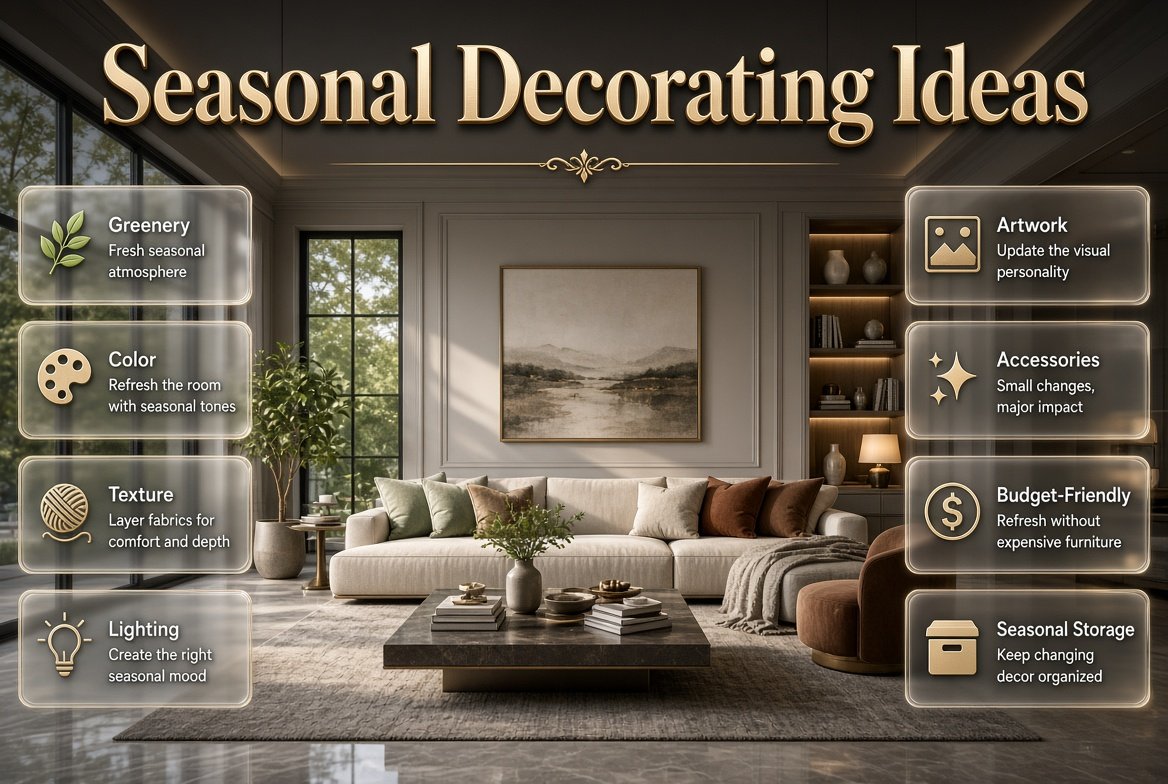
Seasonal Decorating Ideas | A home can feel completely different as the seasons change, but that doesn’t mean you need to redecorate from scratch every few months. The smartest seasonal decorating ideas focus on small, intentional changes that refresh your rooms while keeping the furniture, layout, and overall character of your home intact.
Maybe your living room feels too heavy when spring arrives. Perhaps your bedroom looks dull during winter, or your dining area needs a warmer atmosphere before holiday gatherings. These are not problems that always require renovation or expensive furniture. Often, the answer is as simple as changing color, texture, lighting, greenery, artwork, and a few carefully selected accessories.
The beauty of seasonal decorating is flexibility. You can make a room feel fresh in spring, airy in summer, warm in fall, and cozy in winter without losing the design style that makes the house feel like yours.
For more broader interior inspiration, practical decorating resources, and home design ideas, explore DesignMode24 Interior Design.
This guide explains how to decorate every major room throughout the year, which colors and materials work best for each season, how to decorate on a budget, how to avoid clutter, how to store seasonal items, and how professional designers create seasonal interiors that feel polished rather than overdone.
What Are Seasonal Decorating Ideas?
Seasonal decorating ideas are simple changes made to a home’s colors, textures, accessories, lighting, textiles, and natural elements to reflect a particular season. Instead of replacing permanent furniture, homeowners usually rotate smaller decorative details such as cushions, throws, flowers, artwork, table settings, candles, and greenery.
The most effective approach is to divide your interior into two layers:
Permanent layer: furniture, flooring, cabinets, major lighting, architectural details, and large rugs.
Seasonal layer: cushions, throws, bedding, flowers, accessories, artwork, table décor, and smaller decorative pieces.
This approach makes decorating easier, less expensive, and much less wasteful.
A seasonal interior should still look like the same home. If someone walks into your living room in April and again in December, the atmosphere should change, but the underlying design identity should remain recognizable.
Why Does Seasonal Decorating Matter?
Seasonal decorating gives you a practical way to respond to changes in weather, daylight, lifestyle, entertaining, and mood.
During warmer months, people generally prefer lighter visual textures and more open-looking rooms. As temperatures fall, layered fabrics, warmer colors, softer lighting, and comfortable accessories become more appealing.
Good seasonal decorating can help you:
- Refresh a room without renovating it
- Make your home feel more comfortable
- Create a welcoming atmosphere for guests
- Highlight natural changes outside your windows
- Experiment with new colors
- Make holidays feel special
- Avoid buying completely new furniture
- Keep your interior visually interesting
- Improve the connection between rooms and outdoor spaces
💡 Pro Tip: Before buying seasonal décor, remove everything from the previous season and shop your own home first. Items stored in another room may already provide exactly the color or texture you need.
How Do You Decorate Your Home for Every Season?
The easiest way to decorate seasonally is to work with a consistent base and change only a controlled selection of accents. Choose a few seasonal colors, adjust textiles, introduce natural elements, and update lighting where necessary.
A useful seasonal formula is:
Base Interior + Seasonal Color + Texture + Nature + Lighting = Seasonal Atmosphere
You don’t have to change all five elements every time.
For example, changing the cushions and adding fresh greenery may be enough for spring. In winter, you may change bedding, throws, lamps, artwork, and table accessories.
The secret is knowing when to stop.
If a room starts feeling like a themed display instead of a comfortable living space, you’ve probably added too much.
Spring Decorating Ideas for a Fresh and Inviting Home
Spring naturally suggests renewal, freshness, flowers, greenery, brighter days, and lighter materials. Your home can reflect that feeling without becoming covered in pastel colors or floral patterns.
Which Colors Work Best for Spring Decorating?
Spring colors work especially well when they’re slightly muted rather than extremely bright.
Consider:
- Sage green
- Soft cream
- Warm white
- Dusty pink
- Pale blue
- Soft yellow
- Light beige
- Muted lavender
If your walls are neutral, you don’t need to repaint them. Instead, introduce spring colors through cushions, flowers, artwork, tableware, and small accessories.
For additional ideas about choosing and coordinating interior colors, explore Paint Color Ideas.
Add Greenery and Flowers
Nothing communicates spring more naturally than living plants and fresh flowers.
A single vase of seasonal branches can have more impact than several small decorative objects scattered throughout the room.
Try:
- Fresh flowers
- Potted herbs
- Small indoor plants
- Eucalyptus
- Green branches
- Botanical arrangements
Keep the containers simple. A neutral ceramic vase allows the greenery to become the visual focus.
Replace Heavy Textiles
Spring is the right time to put away heavy winter fabrics.
Swap:
- Thick throws for lightweight blankets
- Dark cushion covers for lighter shades
- Heavy bedding for breathable-looking layers
- Dark decorative accessories for natural or soft-colored pieces
You don’t have to remove every warm element. A few textured pieces can still make the room comfortable during cooler spring evenings.
Summer Decorating Ideas for an Airy Interior
Summer decorating should make rooms feel relaxed, bright, and breathable.
That doesn’t mean every room needs a beach theme.
A sophisticated summer interior can rely on neutral colors, natural materials, greenery, and visual simplicity.
Use Natural Summer Materials
Materials such as woven fibers, light wood, cotton, linen-style fabrics, jute, rattan, bamboo-inspired accessories, and ceramic pieces can create a relaxed summer mood.
You can introduce them through:
- Baskets
- Lampshades
- Decorative trays
- Cushion covers
- Area rugs
- Tableware
- Storage containers
Natural materials also add texture without making a room visually heavy.
Create an Indoor-Outdoor Connection
Summer is an excellent opportunity to treat your patio, balcony, terrace, or garden as an extension of the interior.
Use similar colors indoors and outside.
For example:
Living room: cream sofa + sage cushions
Outdoor area: cream cushions + sage planters
This creates continuity between spaces.
For practical ideas covering gardens, patios, terraces, and outdoor living spaces, visit Garden and Outdoor Living Guides.
Simplify Surfaces
Summer is also a good time to remove unnecessary objects.
Clear some space from:
- Coffee tables
- Kitchen counters
- Bedside tables
- Shelves
- Console tables
A visually lighter room often feels cooler and more comfortable.
Fall Decorating Ideas for a Warm and Cozy Home
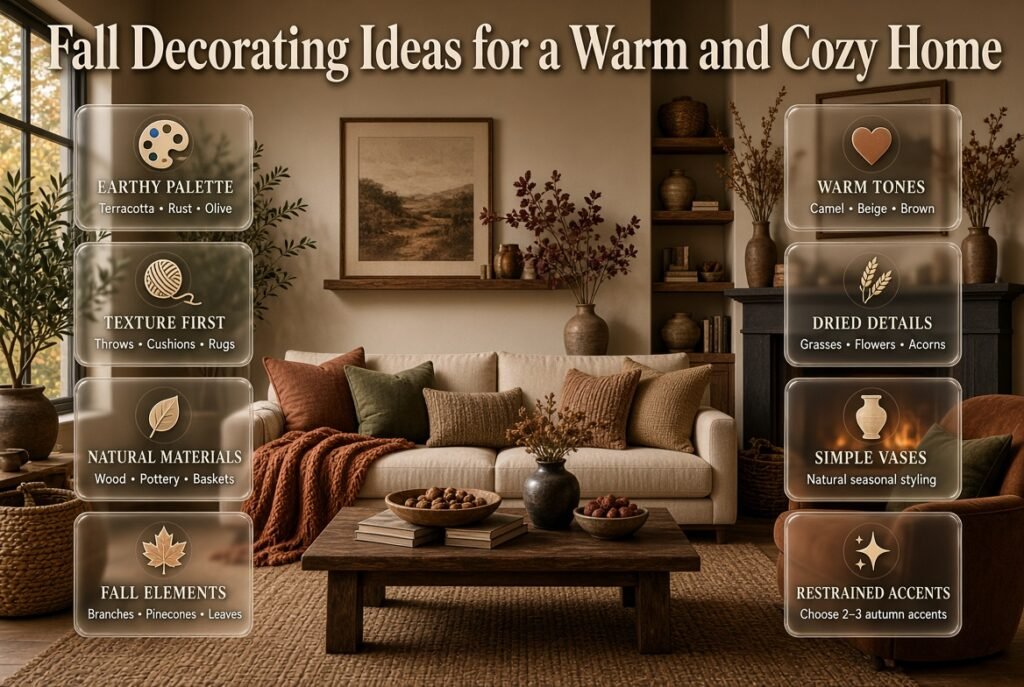
Fall is one of the easiest seasons to decorate because earthy colors and rich textures naturally create warmth.
Instead of relying on bright orange everywhere, build a more sophisticated palette.
Good choices include:
- Terracotta
- Rust
- Olive green
- Camel
- Warm beige
- Deep green
- Chocolate brown
- Muted burgundy
Focus on Texture Before Color
If you want a subtle autumn transformation, don’t immediately add more color.
Start with texture.
Add:
- Woven throws
- Knitted cushions
- Textured rugs
- Natural wood
- Ceramic pottery
- Dried grasses
- Woven baskets
Texture makes a room feel richer without creating visual noise.
Bring Natural Fall Elements Indoors
Fall offers many inexpensive decorative materials.
Consider:
- Dried branches
- Pinecones
- Dried flowers
- Seasonal fruit
- Acorns
- Leaves
- Ornamental grasses
Place these elements in bowls, baskets, and simple vases.
⭐ Expert Tip: A restrained fall palette usually looks more sophisticated than a collection of brightly colored seasonal objects. Choose two or three autumn accents and repeat them throughout the room.
Winter Decorating Ideas for a Warm and Comfortable Home
Winter decorating is less about obvious seasonal objects and more about creating atmosphere.
The combination of texture, lighting, warm colors, and comfortable fabrics can completely change a room.
Layer Lighting for Winter
Winter days are shorter, so lighting becomes especially important.
Use a combination of:
- Ceiling lighting
- Table lamps
- Floor lamps
- Wall lighting
- Accent lighting
- Decorative lighting
Instead of relying on one bright ceiling fixture, create several smaller pools of light.
For more ideas about lighting layers, ceiling treatments, and fixture placement, explore Lighting and Ceiling Ideas.
Add Comfortable Layers
Winter textures can include:
- Wool-style fabrics
- Knitted throws
- Velvet accents
- Soft rugs
- Thick blankets
- Textured cushions
You don’t need all of them in one room.
Choose two or three textures and repeat them naturally.
Use Deeper Accent Colors
Winter interiors can handle stronger tones.
Try:
- Forest green
- Navy
- Charcoal
- Burgundy
- Warm brown
- Deep teal
- Cream
- Camel
The key is balancing darker colors with enough light neutrals so the room doesn’t feel gloomy.
How Can You Decorate Seasonally Without Changing Your Furniture?
You can create four different seasonal looks from the same furniture by treating furniture as your permanent design foundation.
For example, imagine a neutral living room with a beige sofa, wood coffee table, cream rug, and simple curtains.
Spring
Add sage cushions, fresh flowers, pale artwork, and lightweight throws.
Summer
Use blue accents, woven accessories, greenery, and minimal textiles.
Fall
Introduce rust cushions, warm throws, dried branches, and ceramic accessories.
Winter
Add deep green cushions, heavier blankets, warm lamps, and richer textures.
The furniture never changed.
Only the supporting elements did.
This strategy is particularly useful for homeowners who want a fresh look without repeatedly spending money on major pieces.
Seasonal Decorating Ideas for the Living Room
The living room is usually the easiest place to make seasonal changes because it has multiple decorative surfaces.
Start with the sofa.
Changing cushion covers and throws can instantly alter the room’s color balance.
How Should You Style a Seasonal Coffee Table?
A simple coffee table arrangement can follow this formula:
Tray + Book + Decorative Object + Greenery
The tray visually groups the objects together.
The book adds height and personality.
The decorative object introduces shape.
The greenery provides freshness.
Don’t cover the entire table.
A coffee table still needs to be functional.
Use Artwork to Signal the Season
Artwork doesn’t have to literally show a holiday.
Instead, use:
- Botanical prints in spring
- Light landscapes in summer
- Earthy abstract artwork in fall
- Moody or atmospheric artwork in winter
If your home has a strong design identity, seasonal artwork should complement it rather than replace it.
For additional inspiration by room, explore Room-by-Room Interior Design Inspiration.
Seasonal Bedroom Decorating Ideas
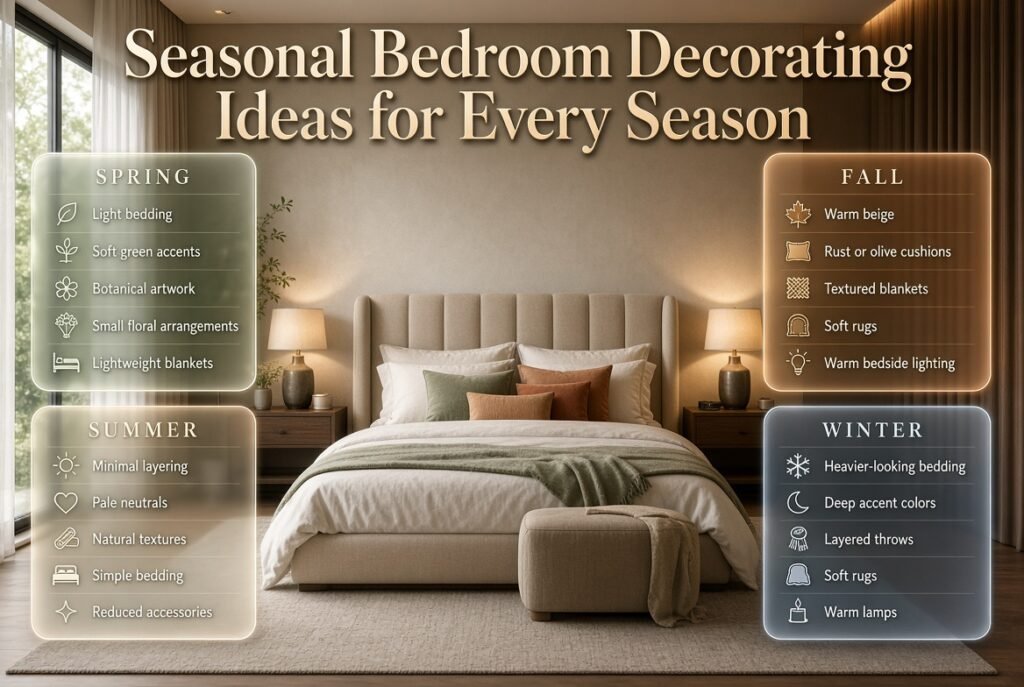
Bedrooms benefit from subtle seasonal changes because comfort should remain the priority.
Spring Bedroom
Choose:
- Light bedding
- Soft green accents
- Botanical artwork
- Small floral arrangements
- Lightweight blankets
Summer Bedroom
Focus on:
- Minimal layering
- Pale neutrals
- Natural textures
- Simple bedding
- Reduced accessories
Fall Bedroom
Add:
- Warm beige
- Rust or olive cushions
- Textured blankets
- Soft rugs
- Warm bedside lighting
Winter Bedroom
Use:
- Heavier-looking bedding
- Deep accent colors
- Layered throws
- Soft rugs
- Warm lamps
Don’t make the bedroom overly decorative. A calm environment is more important than seasonal symbolism.
Seasonal Kitchen Decorating Ideas
Kitchens require more restraint because they are working spaces.
Instead of decorating every countertop, update functional items that can also be attractive.
Try:
- Seasonal tea towels
- Ceramic bowls
- Fruit displays
- Cutting boards
- Small plants
- Table runners
- Decorative containers
A bowl of apples can become fall décor while remaining useful.
A pot of fresh herbs can provide spring or summer greenery while serving a practical purpose.
This is one of the best examples of good interior design: decoration that also works.
For more practical home-related ideas and improvement projects, browse Home Improvement.
Seasonal Dining Table Decorating Ideas
Your dining table can become a seasonal focal point without requiring expensive centerpieces.
Use this four-part structure:
Base + Centerpiece + Texture + Accent
For spring:
- Light runner
- Fresh flowers
- Soft ceramics
- Greenery
For summer:
- Natural woven placemats
- Simple greenery
- Light-colored tableware
- Fresh fruit
For fall:
- Earth-tone runner
- Dried branches
- Ceramic vessels
- Seasonal fruit
For winter:
- Evergreen greenery
- Candles
- Deeper textiles
- Neutral or metallic accents
Should a Dining Table Centerpiece Be Tall?
Usually, a dining centerpiece should remain low enough that people can comfortably see one another.
If the arrangement blocks eye contact, it becomes impractical.
A low bowl, shallow arrangement, or several small vessels can often work better than one oversized display.
Seasonal Bathroom Decorating Ideas
Bathrooms don’t need major seasonal changes.
Small details are enough.
Consider changing:
- Hand towels
- Small artwork
- Soap accessories
- Plants
- Ceramic containers
- Decorative trays
- Small candles where appropriate
Keep everything practical and suitable for the bathroom environment.
If you’re planning a more substantial bathroom lighting update, particularly around pendant fixtures, see Bathroom Hanging Pendant Lighting.
How Paint Colors Affect Seasonal Decorating
Paint is one of the most permanent design decisions, so it shouldn’t normally be changed every season.
Instead, select wall colors that can support multiple seasonal palettes.
For example, a warm white wall can work with:
Spring: sage + dusty pink
Summer: pale blue + natural wood
Fall: rust + olive
Winter: forest green + camel
Similarly, a soft beige room can accommodate both cool summer accents and warm autumn tones.
This is why choosing flexible foundational colors is often more practical than chasing every seasonal trend.
If you want a complete interior approach rather than focusing only on seasonal accents, explore Interior Design.
Seasonal Decorating Ideas for Walls and Floors
Walls and floors don’t need to change every season, but they influence how seasonal décor looks.
Instead of replacing permanent flooring, use:
- Area rugs
- Runners
- Seasonal artwork
- Decorative mirrors
- Removable wall accents
- Textured wall décor
A lighter rug can make summer interiors feel more open, while a thicker-looking rug can create warmth in fall and winter.
For inspiration on coordinating flooring, walls, textures, and decorative surfaces, visit Flooring and Wall Design Inspiration.
How to Decorate Seasonally on a Budget
Seasonal decorating becomes expensive when every season turns into a shopping event.
A better strategy is to buy fewer items that can work across multiple seasons.
Invest in Versatile Pieces
A neutral vase can be used with:
- Spring flowers
- Summer greenery
- Fall branches
- Winter evergreen
A woven basket can hold:
- Light blankets in spring
- Towels in summer
- Throws in fall
- Heavy blankets in winter
A neutral cushion can also become seasonal simply by changing its surrounding colors.
Use the 80/20 Approach
A useful rule is:
80% timeless + 20% seasonal
The permanent 80% keeps your home cohesive.
The seasonal 20% provides freshness.
This is usually more affordable and more visually sophisticated than changing everything.
For additional affordable decorating strategies, explore Easy Decorating Tips for Every Budget.
DIY Seasonal Decorating Ideas
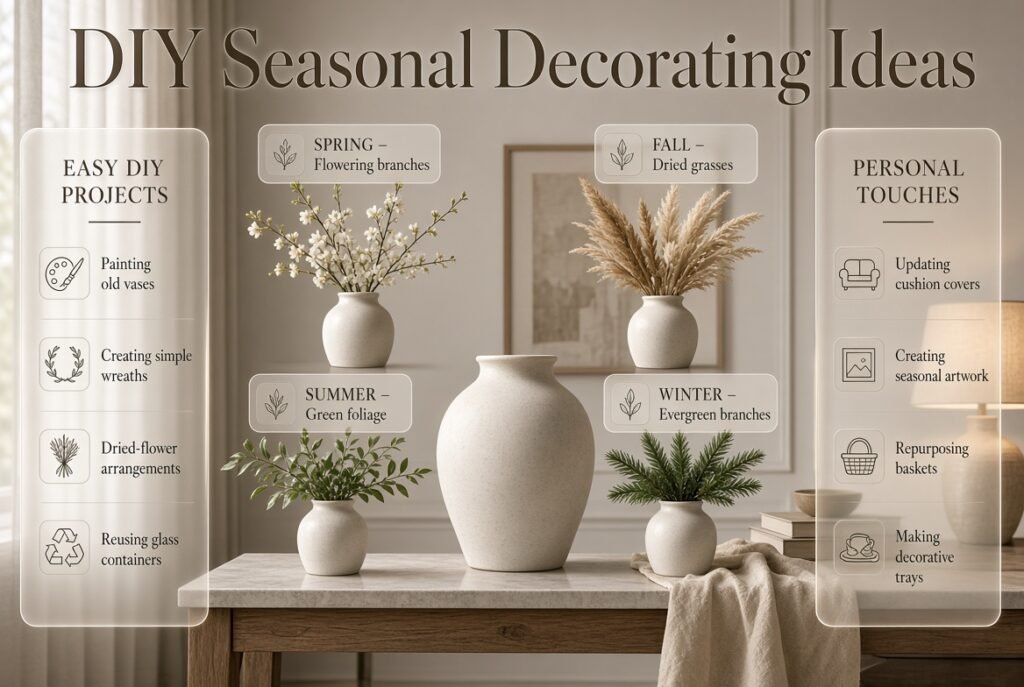
DIY projects can make seasonal decorating more personal while reducing costs.
Useful projects include:
- Painting old vases
- Creating simple wreaths
- Making dried-flower arrangements
- Reusing glass containers
- Updating cushion covers
- Creating seasonal artwork
- Repurposing baskets
- Making decorative trays
For example, take one neutral vase and change its contents throughout the year.
Spring: flowering branches
Summer: green foliage
Fall: dried grasses
Winter: evergreen branches
The container stays the same.
Only the seasonal layer changes.
For more hands-on home projects, visit DIY Home Projects.
How to Decorate a Small Home for Different Seasons
Small homes require more discipline because every decorative object consumes visual and physical space.
Instead of adding many accessories, select one strong focal point.
For example:
Small living room: seasonal cushions + one vase
Small bedroom: bedding + one artwork update
Small dining area: table runner + centerpiece
Small entryway: seasonal mirror styling + small plant
Use vertical space where appropriate.
Wall art, narrow shelves, mirrors, and hanging décor can create seasonal interest without taking up floor space.
Avoid oversized seasonal displays that make rooms feel smaller.
Seasonal Decorating Ideas for Different Interior Styles
Seasonal décor should match the home’s underlying style.
Modern Interiors
Modern homes generally benefit from restraint.
Use:
- Simple greenery
- Sculptural objects
- Controlled colors
- Clean textiles
- Minimal seasonal accessories
Traditional Interiors
Traditional rooms can support more layers.
Try:
- Patterned cushions
- Seasonal flowers
- Ceramics
- Classic artwork
- Decorative trays
- Layered textiles
Scandinavian-Inspired Interiors
Use:
- Natural wood
- Cream
- Soft gray
- Greenery
- Warm lighting
- Simple textiles
Bohemian Interiors
You can introduce:
- Woven materials
- Plants
- Layered textiles
- Handmade-looking accessories
- Rich seasonal colors
The important point is consistency.
A seasonal update should look like a new chapter of the same interior—not a completely different design style.
Seasonal Decorating Ideas for Children’s Spaces
Children’s rooms can be more playful, but safety and practicality should come first.
Seasonal updates can include:
- Bedding
- Removable wall art
- Books
- Soft decorative accessories
- Storage baskets
- Colorful textiles
Avoid fragile items or small decorative pieces where young children can easily access them.
Seasonal décor should also be easy to remove when the child becomes interested in something new.
For design inspiration involving children’s furniture and child-focused environments, see Children’s Hotel Furniture.
How Can You Make Seasonal Decorating Look Expensive?
Expensive-looking interiors are rarely about the number of decorative objects.
They are usually about proportion, consistency, texture, lighting, and restraint.
Repeat Colors
If you introduce sage green on the sofa, repeat a small amount of it in artwork or another room.
Mix Textures
Combine smooth ceramics with woven baskets, soft fabrics, and natural wood.
Use Scale Carefully
One substantial arrangement often looks better than five tiny ones.
Leave Empty Space
Empty space gives decorative objects importance.
Improve Lighting
Good lighting can make inexpensive materials look dramatically better.
Avoid Excessive Themes
A sophisticated seasonal room suggests the season rather than shouting it.
How Should You Store Seasonal Decorations?
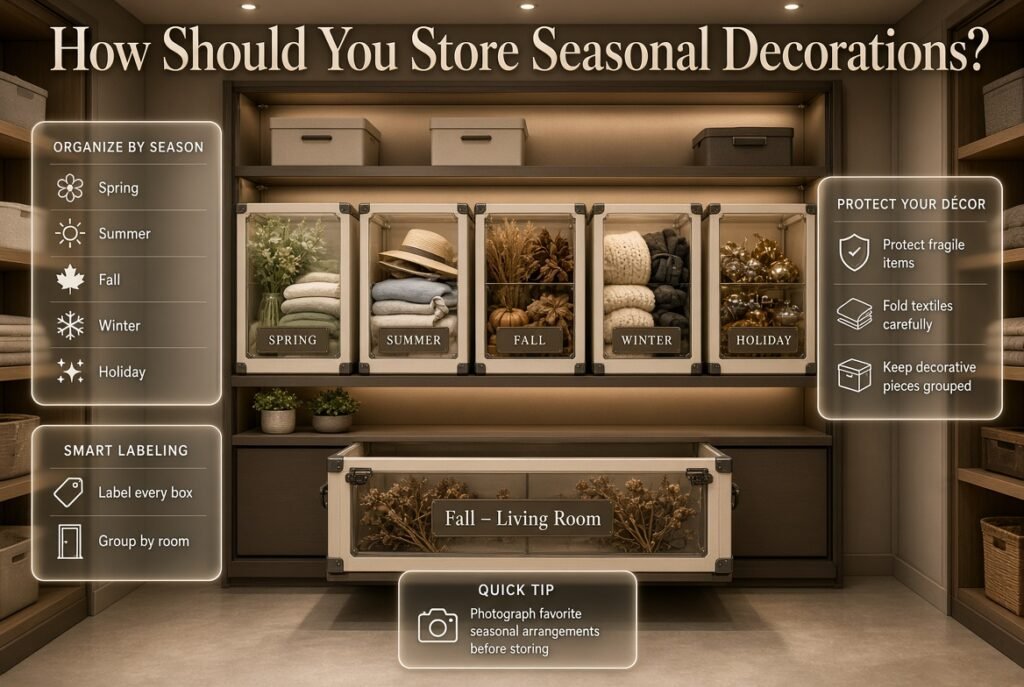
Storage becomes much easier when every season has its own category.
Create separate containers for:
| Storage Box | Typical Contents |
|---|---|
| Spring | Floral décor, light textiles, greenery |
| Summer | Outdoor accessories, light fabrics |
| Fall | Earth-tone décor, dried arrangements |
| Winter | Warm textiles, winter accessories |
| Holiday | Special seasonal decorations |
Label every box.
Protect fragile items.
Fold textiles carefully.
Keep decorative pieces grouped by room when possible.
For example, a box labeled “Fall – Living Room” is more useful than one simply labeled “Fall.”
For broader organization and storage strategies, explore Smart Storage and Organization Ideas.
📌 Quick Tip: Photograph your favorite seasonal arrangements before storing them. Next year, you’ll have a visual reference instead of trying to remember where every piece was placed.
How to Transition From One Season to Another
Seasonal transitions don’t have to happen all at once.
A simple six-step process works well.
Step 1: Remove the Previous Season
Take away the strongest visual elements associated with the previous season.
Step 2: Keep Neutral Pieces
Don’t automatically store everything.
Neutral vases, baskets, trays, and artwork may work year-round.
Step 3: Change Textiles
Cushions, bedding, throws, and runners are among the fastest ways to change the atmosphere.
Step 4: Introduce Seasonal Nature
Use greenery, flowers, branches, dried grasses, or other natural elements.
Step 5: Adjust Lighting
Change lamp placement or introduce additional accent lighting if the season requires a different atmosphere.
Step 6: Edit the Room
Remove anything that now feels unnecessary.
The final editing stage is important.
Decorating isn’t complete because every available surface contains an object.
It’s complete when the room feels balanced.
Common Seasonal Decorating Mistakes to Avoid
Decorating Every Surface
Why it happens: Empty surfaces can feel unfinished.
Why it’s harmful: Too many objects create visual noise.
How to avoid it: Choose focal points and intentionally leave some surfaces clear.
Changing Too Much
Why it happens: Seasonal inspiration can make your existing furniture seem boring.
Why it’s harmful: Replacing large items becomes expensive and can make your interior inconsistent.
How to avoid it: Change the supporting layer first.
Using Too Many Colors
Why it happens: Every seasonal color looks attractive individually.
Why it’s harmful: Combining too many colors weakens the overall palette.
How to avoid it: Choose two or three seasonal accent colors.
Ignoring Function
A beautiful dining table still needs space for plates.
A decorated coffee table still needs usable space.
A kitchen counter still needs working room.
⚠ Common Mistake: Never allow seasonal decorating to interfere with the way your family actually lives. The best decoration improves atmosphere while preserving function.
Buying Before Checking Storage
You may love a seasonal accessory in the store, but if you have nowhere to store it for the next six months, it may not be a practical purchase.
Following Trends Too Closely
Seasonal trends change quickly.
Your home doesn’t need to follow every popular color or decorating style.
Choose what works with your architecture, furniture, lifestyle, and personal taste.
How Professional Designers Approach Seasonal Decorating
Professional designers don’t usually begin with the question, “What decorations should I buy?”
They begin with the room.
They examine:
- Existing colors
- Furniture scale
- Natural light
- Room function
- Traffic flow
- Architectural features
- Existing textures
- Focal points
- Storage
Then they determine what actually needs to change.
This explains why professionally styled seasonal interiors often contain fewer objects than heavily decorated homes.
The designer is not trying to fill space.
They’re creating hierarchy.
A large arrangement can become the focal point.
Smaller objects support it.
Empty space gives everything room to breathe.
For broader expert design guidance and room planning, explore Room-by-Room Design Hub.
How Lighting Changes Seasonal Atmosphere
Lighting is one of the most overlooked parts of seasonal decorating.
The same room can feel completely different under different lighting conditions.
A useful lighting structure is:
Ambient Lighting → Task Lighting → Accent Lighting
Ambient lighting provides overall illumination.
Task lighting supports activities such as reading or cooking.
Accent lighting highlights artwork, plants, architectural features, and decorative objects.
During winter, additional lamps can make a room feel warmer and more intimate.
During spring and summer, allowing more natural daylight into the room can make lighter colors and natural textures more noticeable.
Lighting should support the season rather than simply illuminate it.
A Practical Seasonal Decorating Decision Table
| If Your Room Feels… | Try This |
|---|---|
| Too dark | Add lamps and lighter textiles |
| Too cold | Add warm textures and layered lighting |
| Too cluttered | Remove unnecessary accessories |
| Too plain | Add texture before adding lots of color |
| Too small | Reduce objects and use vertical décor |
| Outdated | Change textiles, artwork, and accessories |
| Disconnected | Repeat one accent color |
| Uncomfortable | Improve lighting and soft furnishings |
This type of diagnosis is more useful than following rigid decorating rules.
Seasonal Decorating for Entryways
The entryway is often forgotten, even though it’s the first interior space people see.
A small seasonal update can make a strong first impression.
Try:
Spring: greenery + light artwork
Summer: woven basket + simple plant
Fall: dried branches + warm-toned runner
Winter: greenery + warm lighting
Don’t overload the entryway.
People need clear space to enter, remove shoes, hang coats, and move through the home.
Function should remain the priority.
Seasonal Decorating for Home Offices
A home office needs to remain productive, so seasonal decoration should be controlled.
Good choices include:
- Small plants
- Seasonal artwork
- Desk accessories
- A new cushion
- A textured throw
- A simple vase
Avoid covering the desk with decorative items.
A cluttered workspace can become distracting.
Instead, change one or two visual elements while keeping the work surface organized.
For practical improvements that can make everyday home spaces more functional, Practical Home Improvement Guides can provide additional direction.
How to Create a Seasonal Decorating Budget
A seasonal budget becomes easier when you divide purchases into categories.
Priority 1: Items You Already Own
Always start here.
Priority 2: Replaceable Textiles
Cushions, throws, bedding, and table linens offer strong visual impact.
Priority 3: Natural Elements
Flowers, branches, plants, and seasonal greenery can be inexpensive.
Priority 4: One Investment Piece
If you want something new, choose one quality item that can work across several seasons.
Priority 5: Trend Pieces
Only buy highly seasonal items if you genuinely love them and have adequate storage.
This prevents seasonal decorating from becoming an unnecessary recurring expense.
How to Keep Seasonal Decorating Sustainable
Good seasonal decorating doesn’t have to mean constant consumption.
You can make the process more sustainable by:
- Reusing containers
- Buying versatile décor
- Choosing durable textiles
- Using natural materials
- Repurposing existing accessories
- Repairing instead of replacing
- Shopping secondhand where appropriate
- Creating DIY décor
- Avoiding disposable seasonal decorations
A beautiful home doesn’t need to produce a large amount of waste every time the calendar changes.
How to Personalize Seasonal Decorating
The best seasonal interiors reflect the people who live there.
You can personalize your décor through:
- Family traditions
- Travel souvenirs
- Favorite colors
- Handmade pieces
- Personal photographs
- Books
- Artwork
- Collected objects
- Seasonal memories
For example, a family might display a particular ceramic bowl every autumn because it has become part of their yearly tradition.
That object may not be trendy, but it has meaning.
And meaningful décor often creates a stronger home than perfectly coordinated showroom accessories.
How Can I Decorate My Home for Every Season Without Spending a Lot of Money?
The smartest way to decorate seasonally on a budget is to keep your major furniture, wall colors, flooring, and other permanent elements relatively timeless, then change the smaller details that influence the room’s atmosphere. You don’t need to purchase an entirely new décor collection four times a year. In fact, a carefully selected combination of cushion covers, throws, table linens, artwork, flowers, greenery, and decorative accessories can completely change how a room feels.
Start by creating a neutral foundation that works throughout the year. Warm white, cream, beige, natural wood, soft gray, or muted earthy tones are particularly useful because they can support different seasonal accent colors. From there, rotate only a small collection of accessories.
Budget-friendly seasonal updates include:
Changing cushion covers instead of buying new cushions
Swapping lightweight and heavier throws
Using fresh or dried flowers
Rearranging existing artwork
Changing table runners and placemats
Introducing seasonal greenery or branches
Moving accessories between rooms
Updating lampshades or small lighting accents
Repurposing baskets, trays, and vases
Creating simple DIY seasonal decorations
A neutral vase, for example, can remain in your living room all year. What changes is what’s inside it: fresh flowers in spring, greenery in summer, dried branches in fall, and evergreen foliage in winter.
This approach is also consistent with the broader 2026 movement toward fewer, more intentional pieces rather than constantly buying new décor.
Professional takeaway: Spend your decorating budget on versatile pieces that can work across multiple seasons. If an item only makes sense for one holiday or one month of the year, think carefully before buying it.
What Are the Best Seasonal Decorating Ideas for a Small Home or Apartment?
Small homes can actually benefit greatly from seasonal decorating because even a few carefully selected changes can make a noticeable difference. The key is avoiding the temptation to add more and more decorations simply because you’re changing the season.
Instead, focus on high-impact, low-volume updates.
For spring, you might replace dark cushions with lighter covers and introduce one fresh plant. In summer, remove unnecessary textiles and add natural woven accessories. During fall, bring in a textured throw and a small arrangement of dried branches. In winter, layered bedding, warm lighting, and deeper accent colors can make the space feel considerably cozier without taking up additional floor space.
Vertical decorating is particularly useful in compact rooms. Artwork, mirrors, narrow shelves, wall-mounted décor, and taller plants can add seasonal interest without consuming valuable floor area.
For a small living room, try:
Two seasonal cushion covers
One textured throw
One vase or plant
A small artwork change
One warm or decorative lamp
A simple coffee-table arrangement
You can also use multifunctional objects. A woven basket can hold blankets in winter and plants or lightweight accessories during warmer months. A decorative tray can work on a coffee table, dining table, or entryway throughout the year.
Storage should also influence what you buy. If every seasonal transition requires several large boxes, your decorating system is probably too complicated.
Professional takeaway: In a small home, seasonal decorating should create a change in mood, not a change in volume. Keep the room breathable, functional, and visually calm.
What Colors and Materials Work Best for Seasonal Home Décor?
The best seasonal color palettes aren’t necessarily the brightest or most obvious ones. Professional-looking interiors usually combine a stable neutral foundation with a few seasonal accents.
For spring, consider sage green, soft blue, muted blush, warm white, pale yellow, and light natural wood.
For summer, lighter neutrals, soft blues, sandy beige, natural textures, and fresh greens can create an airy atmosphere.
For fall, earthy colors such as olive, terracotta, tobacco, burgundy, chocolate brown, muted plum, and warm beige are particularly effective. Current 2026 fall design coverage is moving beyond predictable orange-heavy schemes and toward richer, more sophisticated earthy combinations.
For winter, deeper greens, navy, burgundy, charcoal, cream, camel, and warm brown can create a comfortable layered environment.
Materials are equally important. Linen-style fabrics, cotton, wool, wood, ceramic, rattan, jute, woven fibers, velvet, and natural stone can introduce seasonal character without making the room look overly themed.
The most effective approach is to change texture as well as color.
A room can feel more autumnal simply because you introduced a chunky throw, textured cushions, warm wood, and softer lighting—even if the wall color remains exactly the same.
Likewise, a summer room doesn’t need to be completely blue and white. Removing heavy textiles and introducing lighter fabrics and natural materials may be enough.
A useful seasonal formula is:
Permanent neutral base + 2–3 accent colors + seasonal textures + natural element
This gives you variety without sacrificing cohesion.
Professional takeaway: Don’t treat seasonal colors as rules. Use them as a flexible palette that complements the colors and materials already present in your home.
How Often Should I Change My Seasonal Décor?
Most homes don’t need a dramatic decorating change every time the calendar moves into a new season. A more practical approach is to make gradual seasonal transitions, usually four times a year, with smaller adjustments around holidays or special occasions.
A useful rhythm is:
Spring: Late February through March
Summer: May through June
Fall: Late August through September
Winter: November through early December
The exact timing should depend on your climate, lifestyle, and personal preference rather than a strict decorating calendar.
For example, if the weather is still extremely warm, bringing out heavy fall blankets simply because September has arrived may not make sense. Likewise, you don’t need to completely transform your home on the first day of winter.
A gradual transition often looks more natural:
Stage 1: Remove the Previous Season
Put away the strongest seasonal colors and accessories.
Stage 2: Keep the Timeless Pieces
Neutral vases, baskets, artwork, furniture, and other versatile pieces can stay.
Stage 3: Change Textiles
Swap cushion covers, throws, bedding, or table linens.
Stage 4: Add Seasonal Nature
Introduce flowers, greenery, branches, dried grasses, or other natural elements.
Stage 5: Adjust Lighting
As daylight changes, lamps and accent lighting become increasingly important. Layered lighting is particularly relevant in 2026 interiors, where warmer, more atmospheric illumination is replacing the reliance on a single bright overhead fixture.
This gradual method prevents seasonal decorating from feeling forced.
Professional takeaway: Seasonal decorating should follow the experience of the season—not simply the date on the calendar. Let temperature, daylight, lifestyle, and your home’s natural surroundings guide the transition.
How Can I Make Seasonal Decorating Look Elegant Instead of Cluttered or Too Themed?
The difference between elegant seasonal decorating and cluttered seasonal decorating usually comes down to editing.
The most common mistake is adding seasonal objects without removing anything first. A homeowner may add pumpkins, candles, cushions, artwork, table décor, wreaths, and accessories while leaving all the previous decorations in place. The result is technically seasonal, but visually overwhelming.
Instead, think in layers.
Keep your permanent furniture and foundational décor first. Then introduce a limited seasonal layer that supports the existing interior.
For example, an elegant fall living room doesn’t need pumpkins on every surface. A textured throw, two rust or olive cushions, a ceramic vase filled with dried branches, and warmer lighting may communicate autumn far more effectively.
Current designer advice is increasingly moving toward subtle seasonal references, natural materials, layered textures, and personal pieces instead of highly literal themed décor.
Use the Rule of Three
Choose approximately three related seasonal elements.
For example:
Warm color
Natural material
Seasonal greenery
Or:
Textured cushion
Throw
Artwork
This creates visual consistency without requiring dozens of accessories.
Repeat Instead of Scatter
If you choose olive green as a fall accent, repeat it in two or three places rather than introducing six unrelated colors.
Leave Empty Space
Not every shelf, table, or countertop needs decoration.
Empty space gives your chosen pieces more visual importance.
Choose Meaningful Objects
Personal photographs, handmade ceramics, vintage pieces, books, travel finds, and family objects can make seasonal styling feel authentic rather than commercially staged.
This also reflects a broader 2026 preference for interiors that feel collected over time and personally meaningful rather than perfectly coordinated or showroom-like.
Professional takeaway: The goal isn’t to make visitors immediately guess which season you’re decorating for. The goal is to make the room feel appropriate for that season while still looking unmistakably like your home.
Conclusion
Seasonal decorating does not have to mean completely redesigning your home every few months or filling every room with themed accessories. The most successful approach is thoughtful, flexible, and personal. A few carefully chosen changes in color, texture, lighting, textiles, greenery, and decorative accents can make a home feel naturally connected to the season without sacrificing comfort or timeless style.
The key is to build your décor around a strong foundation and then introduce seasonal character through smaller, intentional details. Swap lightweight fabrics for warmer textures in fall and winter, bring in fresh greenery and softer colors during spring, and use breathable fabrics and lighter accents when summer arrives. This approach keeps your home visually fresh while reducing unnecessary spending and storage problems.
Seasonal decorating is also an opportunity to make your home more personal. Family heirlooms, handmade pieces, natural materials, artwork, books, plants, and meaningful objects can create a sense of character that mass-produced seasonal décor often cannot. Current design thinking increasingly favors interiors that feel collected, comfortable, and connected to the people who live in them rather than spaces that look perfectly staged.
For homeowners looking for more inspiration, practical guidance on Interior Design can help connect seasonal styling with the larger principles of proportion, color, lighting, functionality, and personal expression.
Ultimately, the best seasonal decorating ideas are the ones that make your home feel better to live in. You do not need to follow every trend or purchase new décor for every season. Focus on changes that improve atmosphere, reflect the time of year, and work naturally with your existing interior. When seasonal decoration is intentional rather than excessive, even simple adjustments can create a home that feels welcoming, polished, and refreshed throughout the year.

Leave a Reply