

Introduction
Warm Modern Interiors with Natural Wood | A home can look modern and stylish yet still feel cold when you spend time in it. White walls, sleek furniture, glossy surfaces, and minimal decoration may create a clean appearance, but without enough texture and warmth, the rooms can feel less inviting than you expected. Natural wood offers a simple way to solve this problem without abandoning the contemporary look you love.
Warm modern interiors with natural wood combine clean architectural lines, practical furniture, natural materials, and comfortable colors to create spaces that feel refined and welcoming. Wood introduces visible grain, natural variation, and depth, while modern design keeps the overall appearance organized and uncluttered.
If you’re planning a new interior or updating an existing home, start with DesignMode24 Interior Design, where thoughtful layouts and practical design decisions can help you create a home that suits your lifestyle.
The secret is not to use wood everywhere. It’s to understand which wood tones work with your existing finishes, where timber creates the greatest impact, and how to balance it with lighting, textiles, paint, and furniture. A pale oak floor, a walnut dining table, or a simple wooden headboard can completely change the atmosphere of a room when the surrounding elements are chosen carefully.
This guide explains how to create warm modern interiors room by room, select complementary materials, coordinate different wood finishes, manage your budget, avoid common mistakes, and make design decisions that remain useful long after current trends change.
1. What Are Warm Modern Interiors with Natural Wood?
Warm modern interiors combine contemporary simplicity with materials, colors, and textures that make a home feel comfortable. Natural wood is one of the main elements, but the style also relies on thoughtful proportions, functional layouts, restrained decoration, and lighting that supports everyday activities.
Unlike a strictly minimalist interior, which may prioritize visual simplicity above everything else, a warm modern home also considers how the space feels to live in. A room should look organized without feeling empty, and it should feel comfortable without becoming cluttered.
The essential characteristics of this design style
Several elements work together to create the look.
- Natural materials: Wood, stone, linen, wool, and ceramic surfaces introduce texture and variation.
- Simple furniture: Straight lines, gentle curves, and practical shapes keep the interior contemporary.
- Warm neutrals: Cream, warm white, beige, taupe, and soft brown create a comfortable foundation.
- Controlled contrast: Darker wood, black metal, and muted accent colors provide definition.
- Layered lighting: Ambient, task, and accent lighting make rooms functional throughout the day.
- Purposeful decoration: Artwork, plants, books, and accessories add personality without filling every surface.
The best interiors balance these features rather than allowing one material or color to dominate.
For example, a living room might have pale oak flooring, a cream sofa, a walnut coffee table, linen curtains, and a few black metal details. Each element contributes something different, but the restrained palette connects them.
How is warm modern design different from rustic design?
Rustic interiors often emphasize rough timber, distressed finishes, traditional craftsmanship, and a visibly aged appearance. Warm modern interiors generally use cleaner wood finishes, simpler profiles, and more controlled arrangements.
A rustic dining table might have a heavy, weathered surface and substantial legs. A warm modern table may have a similar natural grain but a slimmer profile and a more refined finish.
Neither approach is inherently better. The right choice depends on your architecture, lifestyle, and preferred atmosphere.
2. How Do You Choose the Best Wood Tone for Your Home?
The best wood tone is one that works with your existing flooring, wall colors, natural light, and furniture. Light woods create an airy appearance, medium tones provide versatility, and dark woods add depth. Choose a dominant tone first, then introduce other finishes that complement it rather than purchasing each item independently.
Light wood: Bright and relaxed
Pale oak, ash, and birch are useful choices for interiors that need an open, understated appearance. Their lighter colors work particularly well with cream upholstery, warm-white walls, simple cabinetry, and natural fabrics.
Light wood is suitable for:
- Smaller living rooms where visual heaviness should be limited.
- Bedrooms designed around soft, calming colors.
- Open-plan homes that need continuity between different zones.
- Contemporary kitchens with pale cabinets and understated countertops.
However, an entirely pale interior can appear flat if every surface has a similar color and finish. Introduce contrast through textured upholstery, darker hardware, artwork, or a medium-toned table.
Medium wood: Balanced and adaptable
Medium oak and similar brown finishes offer a useful middle ground between pale timber and dark walnut. They provide warmth without necessarily becoming the strongest visual feature in a room.
A medium-toned dining table, for example, can connect pale flooring with darker chairs. The result feels more layered than a room in which every wooden object has exactly the same finish.
Medium wood also works well in family homes because it can complement a wide range of upholstery colors, including beige, olive, cream, and muted blue.
Dark wood: Rich and architectural
Walnut and deep brown finishes introduce contrast and make selected pieces feel more substantial. They can work particularly well for dining tables, bed frames, media cabinets, consoles, and built-in storage.
Dark wood is most effective when lighter surfaces surround it. A walnut coffee table against a cream sofa, for instance, becomes a clear focal point without making the entire living room feel dark.
In a small or poorly lit room, consider using dark wood on one or two important pieces rather than covering the floor, walls, and cabinetry with the same deep finish.
Compare wood tones before making a decision
| Wood tone | Best visual effect | Complementary colors | Main consideration |
|---|---|---|---|
| Pale oak or ash | Airy and understated | Cream, warm white, sage | May need contrast |
| Medium brown | Balanced and versatile | Beige, olive, warm gray | Check undertones |
| Walnut | Rich and sophisticated | Ivory, taupe, muted green | Can feel heavy in excess |
| Golden timber | Sunny and welcoming | Warm white, clay, brown | May look too yellow under some lights |
| Deep brown | Strong and dramatic | Cream, stone, soft neutrals | Requires thoughtful lighting |
Professional advice: Don’t select a wood finish from a tiny online photograph alone. Ask for a physical sample and compare it against your flooring, paint, countertop, and upholstery. View the combination in morning daylight and under your evening lighting.
3. How Can You Mix Different Wood Tones Without Making a Room Look Messy?
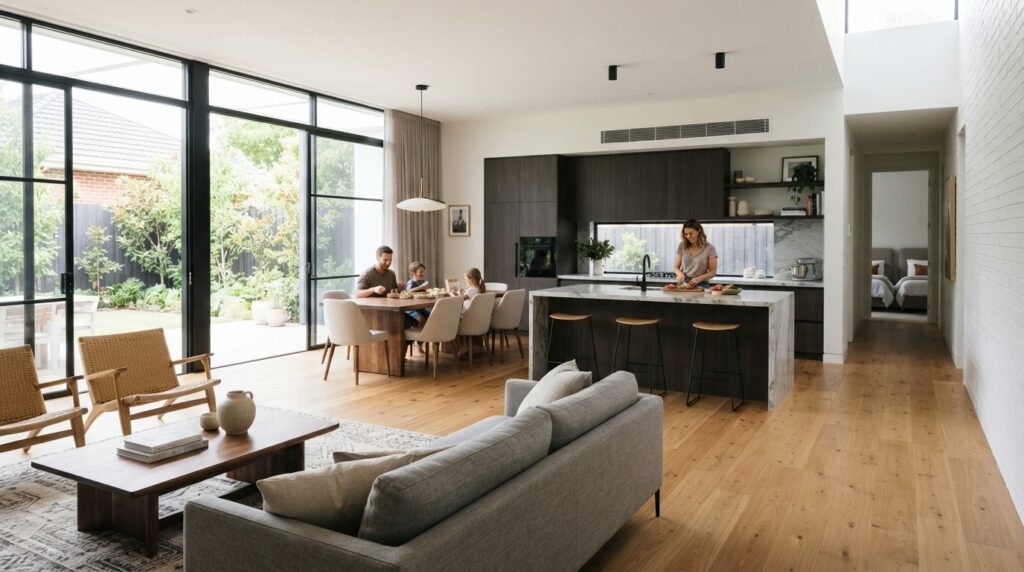
Different wood tones can work together when each finish has a clear role. Select one dominant tone for a large surface, such as flooring or extensive cabinetry, then introduce a secondary tone through furniture. Use additional finishes sparingly, and check that their undertones and visual weight complement one another.
Follow a simple three-tone approach
Think of your wood finishes as three categories rather than a collection of unrelated purchases.
First, choose the dominant finish. This is often the flooring, kitchen cabinetry, or a large built-in feature. Because it covers a significant area, it establishes the room’s overall character.
Second, choose a complementary finish. A dining table, bed frame, or substantial coffee table can introduce a different shade while maintaining a natural connection.
Third, add a small accent finish if necessary. A stool, picture frame, or side table can provide extra contrast without creating competition.
For example, a living room with light-oak flooring, a walnut coffee table, and a darker brown side table can feel cohesive when the walls and upholstery provide enough visual breathing room.
Pay attention to undertones
Wood can have golden, reddish, neutral, or grayish undertones. Two finishes may appear similar in brightness yet clash because their underlying colors differ.
A honey-colored oak floor may look uncomfortable beside a strongly gray-toned cabinet. Conversely, a neutral oak floor and a warm walnut table can work well together because their difference feels intentional.
You don’t need every finish to have identical undertones, but you should understand how the colors relate.
Use materials to separate contrasting finishes
When two wood tones look too similar but not identical, introduce a connecting material between them. A fabric rug, upholstered chair, stone surface, or painted cabinet can help distinguish the finishes.
This technique is particularly useful in open-plan rooms, where flooring, dining furniture, and kitchen cabinetry may all be visible at once.
Common mistake: Buying a complete furniture set simply because all the pieces match. Matching furniture can be convenient, but repeating the same finish and shape everywhere may make a room feel less personal. A coordinated mixture often looks more considered.
4. Which Wall Colors Work Best with Natural Wood?
Warm white, cream, beige, taupe, muted green, and earthy shades are dependable wall colors for warm modern interiors. The best choice depends on the wood’s undertone, the room’s natural light, and the atmosphere you want to create. Always test paint beside the actual wood instead of judging the colors separately.
Warm white and cream
Warm white provides a clean background while avoiding the stark appearance that some cool whites create beside golden timber. Cream adds a slightly richer quality and works particularly well in living rooms and bedrooms.
Use these colors when you want the wood to remain the main feature without introducing a strong contrast.
Beige and taupe
Beige provides a soft, natural backdrop for oak and walnut. Taupe adds a little more depth and can help define a seating area or create a quieter bedroom atmosphere.
To avoid a flat appearance, combine several related shades. For instance, use warm-white walls, an oatmeal sofa, taupe curtains, and a medium-oak coffee table rather than choosing exactly the same beige for every surface.
Muted green
Sage and olive are useful accent colors because they complement many brown wood tones without overwhelming the space.
Consider a sage upholstered chair, olive cushions, a muted green cabinet, or a single painted wall. In a kitchen, green cabinetry can also provide a distinctive alternative to an entirely neutral palette.
Terracotta and earthy shades
Clay, rust, and muted terracotta add a stronger sense of warmth. These colors are particularly effective in cushions, artwork, ceramics, and smaller decorative objects.
Use them in measured amounts. If the wood already has a strong golden or reddish appearance, excessive terracotta can make the palette feel too orange.
Dark accents for definition
Black and charcoal can provide a crisp contrast against pale wood and soft neutral colors. Use them in slim lighting fixtures, handles, frames, and selected furniture details.
The aim is to create visual definition without allowing dark accents to dominate the room.
When planning your palette, explore the Paint Color category for ideas on coordinating wall finishes with the materials already in your home.
5. How Do You Create a Warm Modern Living Room?
A warm modern living room needs a comfortable seating arrangement, balanced wood tones, practical circulation, and enough texture to prevent the space from feeling cold. Start with the sofa and main furniture layout, then use wooden tables, media cabinets, lighting, and textiles to complete the design.
Begin with the room’s main function
Before selecting furniture, decide how the living room will be used. A household that regularly entertains guests may need generous seating and accessible side tables. A smaller household might prioritize reading, relaxing, or watching television.
The layout should reflect these activities rather than simply copying a showroom arrangement.
Choose a few meaningful wooden elements
A balanced living room could include:
- Light-oak flooring.
- A cream or oatmeal sofa.
- A walnut coffee table.
- A low wooden media cabinet.
- A textured neutral rug.
- A small side table and restrained accessories.
The contrast between the pale floor and darker table gives the room definition. Upholstery softens the harder surfaces, while the rug visually connects the seating group.
Get furniture proportions right
Even beautiful materials can look wrong when the furniture is too large or too small for the room.
As a starting point, approximately 14–18 inches between a sofa and coffee table often provides a practical reach while allowing movement. Adjust the distance for the table’s size, the household’s needs, and the available circulation space.
Also check the distance between seating, doorways, storage units, and walking routes. A comfortable room should not require people to squeeze past furniture.
Plan the focal point
The main focal point might be a fireplace, a large window, a media unit, a statement artwork, or a particularly attractive furniture arrangement.
Choose one dominant feature and let the remaining elements support it. If a walnut media cabinet is already visually strong, a dramatic wood-slat wall, bold artwork, and oversized decorative furniture may not all be necessary.
For more detailed guidance, see Room Focal Point Planning Principles.
When should you add a wood feature wall?
Wood panels can create depth behind a sofa or media unit, but they should relate to the room’s architecture and furniture.
A single feature often creates more impact than covering every wall. Before installation, decide how the panels will interact with electrical outlets, lighting, television mounts, and nearby furniture.
For a budget-conscious update, a carefully selected wooden console or coffee table may provide enough warmth without requiring permanent wall work.
6. How Can You Design a Warm Modern Kitchen with Natural Wood?
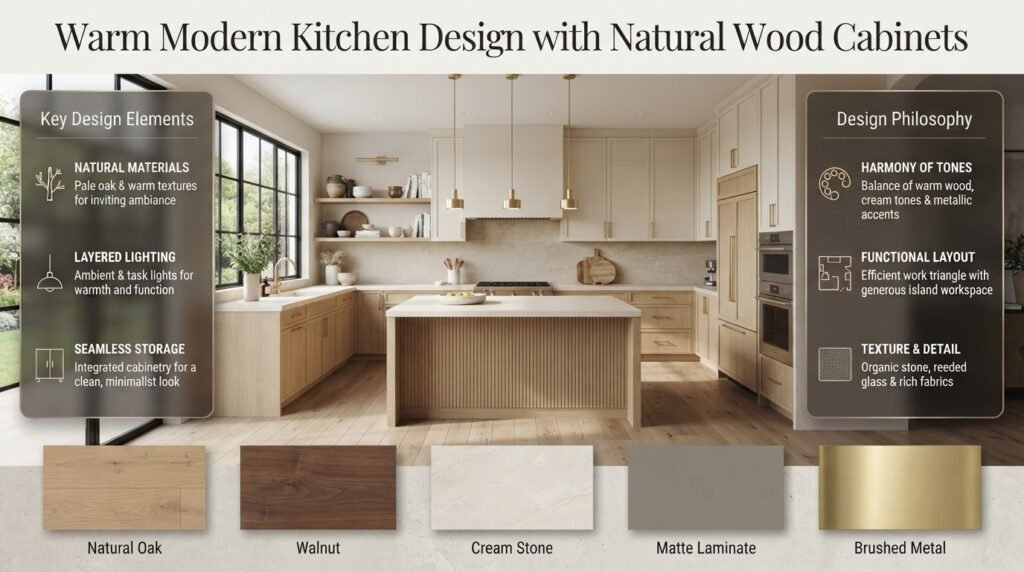
A warm modern kitchen combines practical work surfaces with natural textures and simple cabinetry. Wood can appear in cabinet doors, an island, shelving, or dining furniture, while stone, metal, and durable painted finishes provide contrast. The design should consider cleaning, moisture, heat, and maintenance as carefully as appearance.
Choose where wood will have the greatest impact
You don’t need an entirely wooden kitchen to create warmth.
Wooden lower cabinets paired with lighter upper cabinets can create contrast while keeping the room visually open.
A wood-accented island can become a focal point without requiring every cabinet to use the same finish.
Open wooden shelves can display everyday dishes, but they need regular cleaning and thoughtful organization.
Wood-look laminate or veneer may be appropriate when budget, durability, or maintenance makes solid timber less practical.
The right option depends on the kitchen’s layout and how heavily the surfaces will be used.
Consider durability before choosing a finish
Kitchen cabinetry is exposed to splashes, grease, cleaning products, and changes in temperature and humidity. Wood finishes near sinks and cooking areas need appropriate protection, and edges and joints require particular attention.
Solid wood, veneer, and laminate have different strengths. Solid timber may be repairable or refinishable depending on its condition. Veneer provides a genuine wood surface over a supporting substrate, while laminate can offer a practical surface that is generally straightforward to clean.
No material is automatically suitable for every location. Check the product’s specifications and care requirements before purchasing.
Coordinate the countertop and backsplash
Wood looks especially effective when paired with a contrasting stone or stone-look surface.
A pale-oak kitchen with a cream countertop feels light and understated. Walnut cabinetry with a quieter stone surface creates a richer appearance.
If the countertop already has dramatic veining, keep the cabinet grain and backsplash relatively restrained. Too many strong patterns can make the kitchen feel busy.
Keep everyday storage practical
A modern kitchen should look attractive while supporting cooking and cleaning. Place frequently used items within easy reach, allow adequate clearance for cabinet doors, and avoid shelves that interfere with preparation areas.
The most successful design is one that remains comfortable during ordinary daily routines.
7. How Can You Make a Bedroom Feel Warm Without Adding Clutter?
A warm modern bedroom combines natural wood with soft textiles, simple furniture, and carefully controlled lighting. A wooden bed frame, headboard, bedside tables, or wardrobe fronts can provide the natural character, while neutral bedding and layered fabrics keep the room comfortable and visually calm.
Use the bed as the starting point
The bed is usually the largest piece of furniture in the bedroom, making its material and shape especially important.
Pale oak works well with cream bedding, linen curtains, and muted green accents. Walnut creates a richer atmosphere when paired with warm-white bedding and soft brown details.
A wooden headboard can also provide a focal point without requiring a complicated wall treatment.
Make wardrobes feel integrated
Large wardrobes can dominate a bedroom when their color contrasts sharply with the rest of the room.
Consider simple fronts in a complementary wood finish, or combine wood with painted neutral doors. Full-height cabinetry with restrained hardware can create a more continuous appearance than a collection of unrelated storage units.
However, don’t sacrifice accessibility for visual simplicity. Check door swings, drawer access, and the space needed to dress comfortably.
Balance hard surfaces with soft materials
Wood introduces a solid visual element, so soften it with textiles and appropriate lighting.
Useful additions include cotton or linen bedding, a wool rug, upholstered seating where space permits, and curtains that soften the window edges.
Keep decorative objects selective. A few personal items and a well-chosen bedside lamp usually contribute more than numerous small accessories scattered across every surface.
Make lighting useful as well as attractive
Bedside lighting should support reading and evening routines without producing uncomfortable glare. General room lighting should illuminate the space adequately, while accent lighting can highlight the headboard or a selected architectural detail.
Choose fixtures according to the actual task, not simply their appearance.
8. What Lighting Makes Natural Wood Look Its Best?
Lighting affects how wood appears throughout the day. Warm-white illumination often creates a comfortable atmosphere, while layered lighting supports different activities. The ideal setup depends on the wood’s undertone, the room’s natural daylight, the desired appearance, and whether the space is used for relaxing, working, cooking, or reading.
Layer ambient, task, and accent lighting
Ambient lighting provides general illumination. Ceiling fixtures and well-planned indirect lighting can help the room feel evenly lit.
Task lighting supports specific activities. Examples include reading lamps, desk lights, and under-cabinet kitchen lighting.
Accent lighting highlights artwork, shelving, architectural features, and wood textures. Wall-washing or concealed lighting can make a timber surface more noticeable without adding more decorative objects.
These layers should work together. A room with only one strong ceiling light may feel harsh even when its furniture and materials are well chosen.
Select color temperature thoughtfully
A warm-white range around 2700K–3000K is often a useful starting point for living rooms and bedrooms. Kitchens and work areas may require a different balance depending on the task and personal preference.
Color temperature alone doesn’t determine how accurately a bulb displays wood. Color-rendering performance also matters, especially when choosing between similar wood samples or evaluating paint and fabric colors.
Test the room after sunset
Natural daylight changes the appearance of timber as the day progresses. Artificial lighting can make some finishes appear more yellow, orange, or dull than expected.
Before committing to a large installation, test a sample in the room at different times. This is particularly important for kitchens, wall panels, and built-in cabinetry, where replacing a finish later can be expensive.
9. Which Materials Complement Natural Wood?
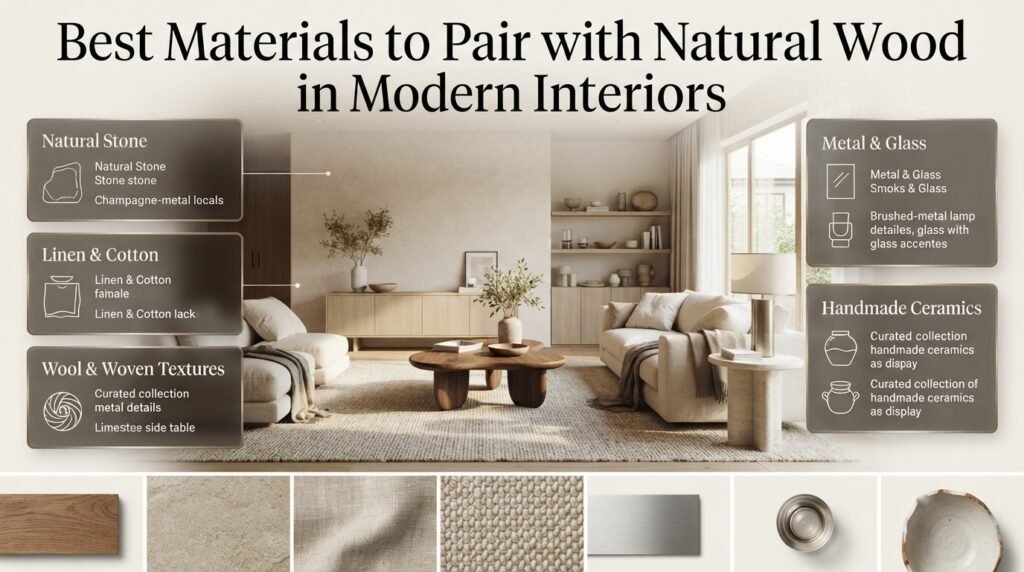
Wood becomes more interesting when combined with materials that offer different textures and visual qualities. Stone adds structure, linen softens hard edges, wool introduces tactile comfort, and metal provides contemporary definition. The best combinations allow each material to contribute without competing for attention.
Natural stone
Stone and wood work well together because they have contrasting visual characteristics. A smooth stone countertop can complement the grain of oak cabinetry, while a stone side table can introduce a solid element beside a wooden sofa table.
If the stone has strong veining, choose quieter wood patterns to maintain balance.
Linen and cotton
Linen curtains, cotton bedding, and soft upholstery prevent a room from feeling dominated by hard surfaces.
These fabrics work particularly well in bedrooms and living rooms, where comfort matters as much as appearance.
Wool and woven textures
A wool rug or woven accessory can create depth without adding another strong color. Textured materials are especially helpful in neutral interiors, where variation comes from the surfaces rather than bold patterns.
Metal and glass
Brushed metal hardware and slim black fixtures can give wooden furniture a more contemporary appearance. Glass is useful when you want visual lightness, especially in compact rooms.
Avoid introducing too many different metal finishes without a reason. A restrained approach usually feels more coordinated.
Ceramic and handmade objects
Ceramic vases, simple tableware, and a few handmade accessories add character to a modern interior. Their subtle variations complement the natural irregularity of wood grain.
Choose pieces that have a purpose or personal meaning rather than filling every surface simply to complete the design.
10. How Can You Make a Small Home Feel Larger and Warmer?
Small homes benefit from natural wood when the materials create continuity without taking up unnecessary visual or physical space. Light or medium wood, compact furniture, integrated storage, and restrained decoration can make different areas feel connected while preserving practical circulation.
Repeat materials across connected spaces
In a compact apartment, use a dominant wood tone in the most visible areas and repeat it selectively in furniture.
For example, light-oak flooring can connect the living and dining areas, while a matching console or shelving detail reinforces the relationship. You can still introduce walnut or darker accents for contrast.
Choose furniture that serves a purpose
Consider pieces that make everyday life easier, such as a storage bench, a compact dining table, wall-mounted shelves, or a coffee table with useful storage.
Before purchasing multifunctional furniture, check that each function is genuinely practical. A table that is difficult to extend or a bench with inaccessible storage may create more frustration than value.
Protect walking space
Avoid filling every corner with furniture. Keep doors, drawers, and windows accessible, and leave enough room to move comfortably between different activities.
A smaller number of appropriately sized pieces often makes a room feel more generous than numerous compact objects placed close together.
Use open shelving carefully
Open shelves can make useful storage accessible, but they also expose everything on display. Group similar objects, leave some space empty, and keep everyday clutter in closed storage.
If you want more ideas for organizing smaller spaces, see Floating Shelf Load Capacity Planning. Remember that the shelf, fixings, wall construction, and installation all affect safe loading.
11. How Do You Create a Cohesive Open-Plan Home?
An open-plan home feels cohesive when its flooring, wood tones, colors, and lighting establish continuity while furniture and rugs define individual activities. The living room, dining area, and kitchen don’t need identical furniture, but they should share enough visual characteristics to feel connected.
Establish a common foundation
Choose a main floor finish, a restrained wall palette, and a limited selection of wood tones before selecting smaller accessories.
This foundation allows each area to have its own character without appearing disconnected from the rest of the home.
Define each activity zone
The living area can use a rug and seating arrangement to establish its boundaries. The dining area can be identified through the table, chairs, and pendant lighting. The kitchen can have its own cabinetry and task lighting while sharing the same underlying palette.
Furniture placement should also preserve clear routes between these areas.
Repeat accents rather than copying entire rooms
A walnut dining table might relate to a smaller walnut accessory in the living room. A similar metal finish can appear on kitchen handles and selected lighting fixtures.
These small repetitions create continuity without requiring every item to match.
Consider family activities
If your household includes children, plan areas for play, homework, storage, and movement. A beautiful open-plan room should still accommodate everyday life without constantly requiring furniture to be moved.
The Play Zone Floor Space Planning guide can help you think about practical activity areas, circulation, and how to preserve usable floor space.
12. How Do You Choose Furniture That Complements Natural Wood?
Furniture should complement the wood’s tone and texture while meeting the practical requirements of the room. The most successful choices consider proportions, construction quality, comfort, and maintenance rather than focusing on appearance alone.
Look at the complete silhouette
A wooden dining table with a thick top and substantial legs creates a different visual effect from a slim table with a refined base.
Choose a shape that suits the room. Heavy furniture may work in a large dining area but feel overpowering in a small apartment.
Rounded edges and curved furniture can soften a room dominated by straight architectural lines. Conversely, simple rectangular furniture can bring structure to an interior with many organic textures.
Evaluate construction quality
Appearance doesn’t reveal everything about a piece of furniture. Check the frame, joints, hardware, finish, stability, and the manufacturer’s care instructions.
For upholstered furniture, consider how the frame supports the seating, whether the cushions are replaceable, and how the fabric will handle everyday use.
The Furniture Frame Construction Comparison guide can help you evaluate construction details before making a purchase.
Don’t confuse expensive with suitable
A premium piece can be a worthwhile investment, but only if it fits your room and lifestyle.
A costly dining table that blocks circulation is a poor choice for a compact home. A more modest table with appropriate dimensions and durable construction may serve you better for years.
Prioritize the pieces that receive the most daily use, and keep decorative purchases flexible.
13. How Can You Use Wood in a Home Office or Multipurpose Room?
Wood can make a home office or multipurpose room feel less clinical while supporting a practical, organized layout. A wooden desk, shelving, storage cabinet, or modest accent surface can introduce warmth, but the design must still provide adequate work space, lighting, and accessible storage.
Create a comfortable working area
Choose a desk with enough surface area for the equipment and activities you use regularly. Position it so the screen, lighting, and chair work together comfortably.
A wooden desk can provide visual warmth, while a simple task light and restrained accessories help keep the area focused.
Separate work and relaxation
If a room serves multiple purposes, use furniture placement, rugs, lighting, or storage to define each activity.
For example, a compact desk can occupy one wall while a comfortable chair and small side table establish a separate reading area. Coordinating wood finishes can connect the zones without making them indistinguishable.
For further guidance on designing spaces that serve several functions, explore Multipurpose Room Planning.
Use storage to maintain a clean appearance
Open shelves can display books and useful objects, while closed cabinets conceal paperwork, cables, and equipment that would otherwise create visual clutter.
The goal is not to remove every personal item. It’s to make the room easy to use and maintain.
14. How Do You Maintain Wood Finishes and Keep Them Looking Good?
Wood maintenance depends on the material, protective finish, room conditions, and frequency of use. Regular dusting, prompt spill cleanup, suitable cleaning products, and protection from excessive moisture can help preserve the appearance of timber and wood-look surfaces.
Follow the finish manufacturer’s guidance
Oiled, waxed, lacquered, veneered, and laminated surfaces do not all respond to the same cleaning methods.
Use products recommended for the specific finish. Avoid assuming that a cleaner suitable for one table will be safe for every wooden surface in the home.
Protect frequently used surfaces
Dining tables, kitchen cabinets, desks, and coffee tables may need extra care because they are exposed to food, drinks, heat, and everyday contact.
Use appropriate coasters and protective pads where practical. Clean spills promptly and avoid dragging heavy objects across finished surfaces.
Consider sunlight and humidity
Prolonged direct sunlight can change the color of some wood finishes. Significant changes in humidity can also affect certain timber products and their supporting materials.
Where practical, use window coverings to control intense sunlight and follow the manufacturer’s recommendations for the room’s environmental conditions.
Inspect rather than replace automatically
Minor surface wear doesn’t always require replacing the furniture. Depending on the finish and the extent of the damage, a suitable repair or refinishing process may restore the appearance.
However, deep damage, swollen edges, or moisture-related problems may need professional assessment.
15. What Are the Most Common Mistakes in Warm Modern Interiors?
Most disappointing results come from poor coordination rather than choosing the wrong design style. Too many wood tones, unsuitable lighting, oversized furniture, and inappropriate materials can make a room feel inconsistent or difficult to maintain.
Mistake 1: Using too many unrelated wood finishes
Why it happens: Furniture is purchased at different times without considering the existing finishes.
Why it causes problems: Every item competes for attention, and the room loses a clear visual foundation.
How to avoid it: Establish a dominant wood tone, select a complementary secondary finish, and introduce additional shades only when they contribute something useful.
Mistake 2: Choosing materials under showroom lighting
Why it happens: A sample looks attractive in a store or online photograph.
Why it causes problems: The color may appear much warmer, cooler, or darker in the actual room.
How to avoid it: Compare samples at home during daylight and evening lighting before making a final decision.
Mistake 3: Covering too many surfaces with timber
Why it happens: Wood is associated with comfort, so it gets added to the floor, walls, ceiling, cabinets, and furniture.
Why it causes problems: The interior may feel visually heavy and lose the contrast that makes individual elements stand out.
How to avoid it: Balance wood with painted surfaces, upholstery, stone, glass, and open space.
Mistake 4: Ignoring furniture proportions
Why it happens: A piece looks attractive in a large showroom but is too bulky for the home.
Why it causes problems: Walking routes become narrow, drawers cannot open comfortably, and the room feels cramped.
How to avoid it: Measure the room, mark the furniture footprint, and test the layout before purchasing.
Mistake 5: Prioritizing appearance over maintenance
Why it happens: The initial look receives more attention than everyday use.
Why it causes problems: A finish may be unsuitable for moisture, frequent cleaning, or heavy use.
How to avoid it: Check product specifications, cleaning requirements, and expected durability before committing.
Mistake 6: Adding accessories to solve every design problem
Why it happens: A room feels unfinished, so more decorative objects are purchased.
Why it causes problems: Clutter increases without addressing the real issue, which may be poor lighting, an unbalanced layout, or insufficient contrast.
How to avoid it: Identify what is missing before buying anything. Sometimes moving furniture, changing a bulb, or removing an unnecessary item makes a bigger difference than adding decoration.
16. How Can You Create Warm Modern Interiors on a Budget?
You can achieve a warm modern appearance without replacing every surface or purchasing premium furniture. Focus on the changes that affect the room most, reuse suitable pieces, and spend more carefully on items that receive frequent use.
Start with the highest-impact changes
If the room feels cold, consider these changes in order:
- Improve the lighting.
- Add or rearrange soft furnishings.
- Introduce one well-chosen wooden furniture piece.
- Coordinate the existing wall colors and accessories.
- Consider larger renovations only if the underlying finishes remain unsuitable.
This approach helps you identify which improvements genuinely make a difference before spending more.
Reuse furniture where possible
An existing wooden table may need only a suitable cleaning or refinishing treatment. A console can move from one room to another, while neutral upholstery can often work with a revised color palette.
Don’t replace furniture simply because it doesn’t match perfectly. Assess its condition, dimensions, quality, and usefulness first.
Compare total project costs
When comparing timber, veneer, and laminate, include more than the initial purchase price. Installation, finishing, maintenance, repairs, and material waste can affect the total cost.
Request itemized quotations for larger projects and compare the same scope of work. This makes it easier to understand whether a more expensive option provides a meaningful long-term benefit.
For smaller improvements, the DIY Home Projects section can help you explore practical updates while keeping the scope manageable.
Make durability part of the budget
A lower-cost product can be a sensible choice if it suits the room and has appropriate construction. However, a finish that fails quickly under daily use may cost more over time.
Spend according to the demands of each space rather than treating every item as equally important.
17. How Can You Keep a Natural Wood Interior Timeless?
A timeless interior relies on good proportions, functional furniture, a balanced palette, and materials that can work with future changes. Natural wood provides a flexible foundation because it can complement different upholstery colors, decorative objects, and styles of lighting without requiring the entire room to be redesigned.
Choose a restrained foundation
Use flooring, cabinetry, and larger furniture to establish the main palette. Warm neutrals and natural wood tones are generally flexible enough to accommodate different accent colors later.
This doesn’t mean the room must be plain. It means the largest and most expensive elements should support the overall design rather than depend entirely on a short-lived trend.
Introduce personality through smaller elements
Artwork, cushions, lamps, ceramics, and occasional furniture can reflect your personal taste.
These items are easier to change than built-in cabinetry or flooring, so they provide a practical way to update a room without starting from the beginning.
Avoid following every trend at once
A popular wood treatment or decorative feature may suit one home but look out of place in another. Consider whether a design choice supports the architecture, improves daily use, and will remain appealing when the trend changes.
For more ideas about lasting design principles, read Characteristics of Timeless Interiors.
18. What Should You Consider Before Starting a Wood Interior Project?
Before buying materials, review the room’s existing conditions, your priorities, and the practical limits of the project. A clear plan helps prevent unnecessary purchases and reduces the risk of choosing finishes that look attractive individually but fail to work together.
Use this planning checklist
- Measure the room: Record wall lengths, ceiling height, windows, doors, and fixed features.
- List existing materials: Note the flooring, countertops, cabinetry, and finishes you intend to keep.
- Set a budget: Separate furniture, materials, installation, lighting, and contingency costs.
- Choose the main wood tone: Decide which finish will anchor the room.
- Create a material board: Compare paint, timber, textiles, stone, and metal samples together.
- Plan lighting: Identify general illumination, task lighting, and accent lighting.
- Check furniture sizes: Confirm clearances, door swings, storage access, and walking routes.
- Consider maintenance: Choose finishes suited to the room’s moisture, sunlight, and everyday use.
- Review the complete composition: Make sure each material supports the same overall direction.
Make practical improvements one step at a time
You don’t have to finalize every detail at once. Begin with the decisions that are difficult to change, then work toward furniture, lighting, and accessories.
For example, confirm the flooring and cabinetry before selecting the final dining chairs. Once the larger materials are settled, it becomes easier to choose upholstery and decorative accents that genuinely complement them.
If the project includes built-in furniture, shelving, or substantial carpentry, check dimensions and load requirements before installation. Thoughtful preparation can prevent expensive mistakes later.
How Do You Create Warm Modern Interiors with Natural Wood Without Making Your Home Look Rustic?
Creating warm modern interiors with natural wood is about balancing the natural character of timber with clean lines, refined finishes, and uncluttered spaces. Instead of choosing heavily distressed furniture or rough timber everywhere, use wood with a smooth finish, simple profiles, and carefully controlled grain patterns. Pair it with warm-white walls, contemporary furniture, soft upholstery, and understated lighting to maintain a modern appearance.
For example, a living room with pale oak flooring, a streamlined cream sofa, a walnut coffee table, and black metal lighting can feel warm without looking rustic. The contrast between the wood, fabric, and metal creates depth while keeping the design organized.
Practical tips to achieve the look:
Choose furniture with simple silhouettes rather than oversized, heavily distressed wooden pieces.
Combine natural wood with linen, wool, stone, or smooth painted surfaces.
Use warm neutral colors such as cream, beige, and taupe to create a comfortable foundation.
Introduce darker wood or black accents selectively to provide contrast.
Avoid covering every wall, ceiling, and furniture surface with timber.
The most important principle is restraint. Natural wood should add warmth and character, while the overall layout, furniture shapes, and material combinations preserve the clean, contemporary feel.
Which Wood Colors Work Best for Warm Modern Interior Design?
The best wood color depends on your room’s natural light, existing flooring, wall colors, and the atmosphere you want to create. Light oak and ash help rooms feel bright and relaxed, medium-toned oak offers versatility, and walnut introduces richness and contrast. Choosing a finish that complements your existing materials is usually more effective than selecting a wood color simply because it is fashionable.
In a smaller living room, pale oak paired with warm-white walls and beige upholstery can create an open, comfortable appearance. In a larger room, walnut furniture can establish depth and make the design feel more sophisticated. Both approaches work when the wood tone relates naturally to the surrounding colors.
How to choose the right wood tone:
Light oak or ash: Best for airy interiors, smaller rooms, and soft neutral palettes.
Medium oak: Suitable for balanced interiors that need warmth without excessive contrast.
Walnut: Ideal for statement furniture, deeper accents, and refined contemporary spaces.
Golden wood tones: Work well with warm neutrals, but should be tested under artificial lighting.
Dark brown finishes: Add definition but need lighter surfaces and appropriate illumination.
Before making a purchase, compare physical samples with your flooring, paint, upholstery, and countertops. Check them in daylight and in the evening because lighting can change how warm or cool a finish appears.
Can You Mix Different Wood Tones in the Same Room Without Ruining the Design?
Mixing different wood tones can make a room feel more natural and thoughtfully designed, provided the finishes have a clear relationship. You don’t need to match every table, cabinet, and chair. Instead, choose one dominant wood tone, add a complementary secondary finish, and introduce additional shades only when they serve a specific purpose.
For example, light-oak flooring can work beautifully with a walnut coffee table and a darker wooden side table. The lighter floor creates an open foundation, while the darker furniture adds contrast. A neutral rug and cream upholstery help connect the different finishes without making the room feel busy.
Professional guidelines for mixing wood finishes:
Select the flooring or largest wooden surface as your starting point.
Choose a secondary tone that creates intentional contrast rather than an accidental mismatch.
Pay attention to undertones, including golden, reddish, neutral, and grayish shades.
Use upholstery, rugs, stone, and painted surfaces to separate contrasting wood finishes.
Avoid introducing too many unrelated grain patterns and finishes in a small space.
A useful rule is to coordinate the overall appearance rather than demand an exact match. When the wood tones look intentional alongside the other materials, the room can feel richer and more personal than a space furnished with identical finishes.
What Materials and Lighting Make Natural Wood Look More Expensive in a Modern Home?
Natural wood looks more refined when it is paired with complementary materials, suitable lighting, and well-proportioned furniture. Stone, linen, wool, glass, and brushed metal can create contrast and texture, while layered lighting highlights the wood’s grain and prevents the room from feeling flat. The result depends on how the materials work together rather than on the price of each individual item.
For example, a walnut dining table can look especially elegant with upholstered chairs, a restrained stone centerpiece, and a pendant light that provides comfortable illumination. In a living room, a wooden media cabinet paired with a textured rug, warm neutral upholstery, and subtle accent lighting can create a similarly polished effect.
Design choices that elevate natural wood:
Pair wood with stone or a refined stone-look surface for architectural contrast.
Use linen curtains, textured cushions, and wool rugs to soften hard materials.
Choose brushed metal or restrained black accents for a contemporary finish.
Layer ambient, task, and accent lighting instead of relying on one bright ceiling light.
Consider warm-white lighting around 2700K–3000K for living rooms and bedrooms, adjusting it to the room and task.
Keep decorative objects selective so the wood grain and furniture proportions remain visible.
Lighting quality also matters. A suitable color-rendering rating helps materials appear closer to their intended colors, while physical samples reveal how finishes respond to the actual lighting in your home.
Ultimately, a refined interior comes from thoughtful coordination, good proportions, and attention to detail. You can achieve this effect without using expensive materials everywhere if you focus on the elements that have the greatest visual impact.
Conclusion
Warm modern interiors with natural wood show how a home can feel contemporary, comfortable, and timeless without relying on excessive decoration or complicated design choices. By combining the natural beauty of timber with clean lines, warm neutral colors, soft textures, and thoughtful lighting, you can create spaces that feel inviting while maintaining a refined modern appearance. The goal is not to use wood everywhere, but to introduce it where its color, grain, and texture contribute meaningfully to the overall design.
Whether you are updating a living room, redesigning a bedroom, improving a dining area, or making a small home feel more welcoming, focus on balance, functionality, and consistency. Choose wood tones that complement your existing finishes, mix materials carefully, and select furniture that suits the room’s proportions. Small, intentional changes can often create a more successful result than a complete renovation.
Before making major design decisions, consider how your home looks and functions throughout the day. Natural light, circulation, storage, and everyday comfort should guide your choices just as much as appearance. For more practical ideas and inspiration, explore DesignMode24 Interior Design and discover ways to bring warmth, character, and lasting style into your home.
Ultimately, the most successful warm modern interiors reflect the people who live in them. When natural wood is thoughtfully combined with practical layouts, comfortable furnishings, and carefully chosen details, it creates a welcoming atmosphere that remains beautiful and useful long after individual trends have passed.