
Introduction
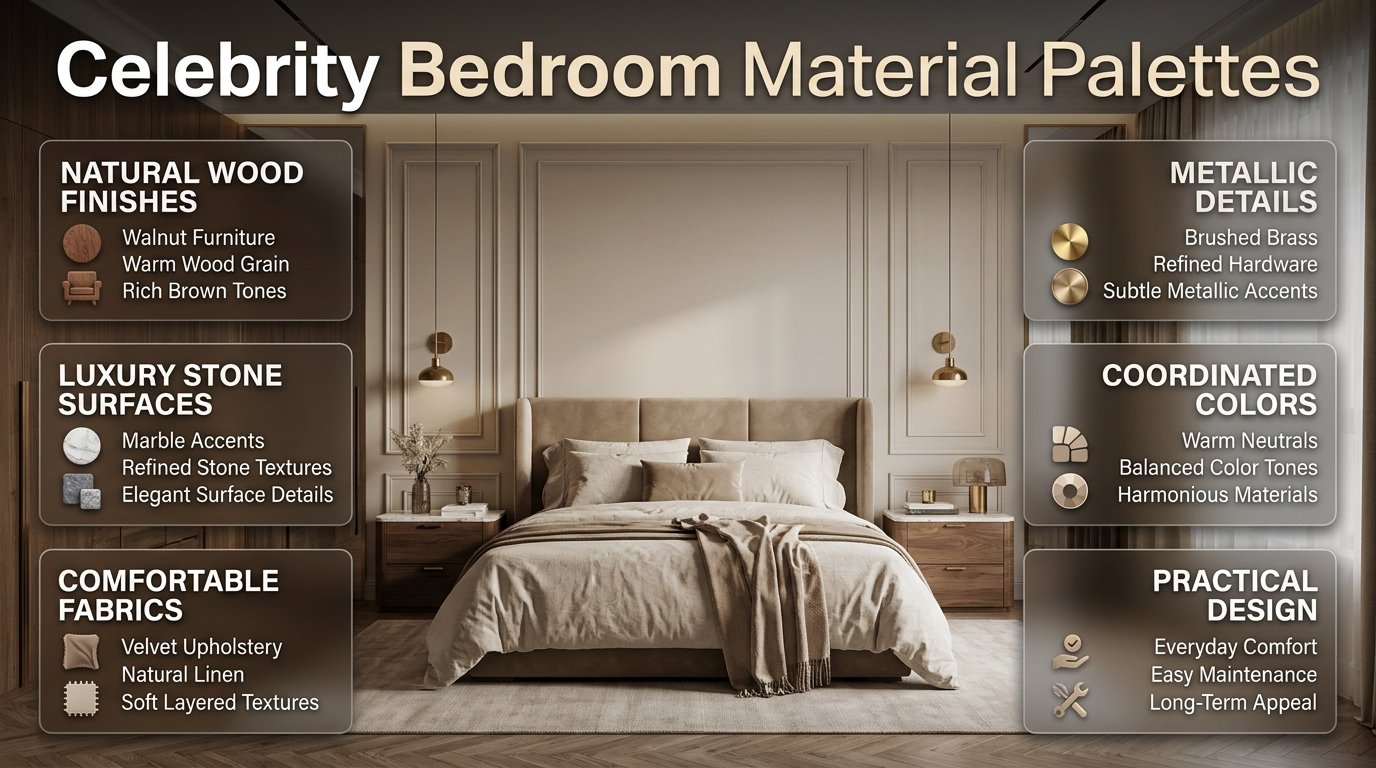
Celebrity Bedroom Material Palettes | Walking into a beautifully designed bedroom can immediately change how you feel about a space. Some bedrooms look expensive without being covered in decorative accessories, oversized furniture, or shiny finishes. Their appeal comes from something more thoughtful: the way natural materials, carefully selected colors, comfortable fabrics, and refined surfaces work together.
This is what makes celebrity bedroom material palettes an interesting source of inspiration for homeowners. Luxury-inspired bedrooms often demonstrate how walnut furniture, marble surfaces, velvet upholstery, natural linen, brushed brass, and subtle wall treatments can create an environment that feels sophisticated without sacrificing everyday comfort.
However, recreating this appearance isn’t simply about buying expensive furniture. A beautiful material palette requires an understanding of color relationships, surface textures, lighting conditions, room proportions, and maintenance requirements. Even a premium material can look out of place when it clashes with the flooring, wall color, or surrounding furniture.
Whether you’re renovating an existing bedroom, furnishing a new property, or simply looking for ways to make your sleeping space feel more refined, choosing the right materials can make a noticeable difference.
At DesignMode24 Interior Design, thoughtful interior planning and practical design inspiration help homeowners understand how different finishes can work together.
This guide explains how to select luxury-inspired bedroom materials, combine colors and textures, choose suitable furniture finishes, avoid expensive mistakes, and develop a coordinated bedroom palette that reflects your personal style. You’ll also discover practical alternatives for different budgets, maintenance considerations, and professional techniques for creating a bedroom that remains attractive for years.
1. Understanding Celebrity Bedroom Material Palettes
Celebrity bedroom material palettes are coordinated selections of colors, textures, fabrics, natural surfaces, and decorative finishes inspired by sophisticated residential interiors. They provide ideas for creating bedrooms that feel comfortable, visually balanced, and carefully finished.
The important distinction is that a luxury bedroom isn’t defined by one particular material. Its appearance depends on how several materials complement one another.
For example, imagine a bedroom with:
- A walnut upholstered bed frame.
- Cream linen bedding.
- A soft beige upholstered headboard.
- Light natural oak flooring.
- A travertine bedside table.
- Brushed brass lighting.
- Warm white walls.
Each finish has a different visual character, but together they create a consistent atmosphere.
Why Material Coordination Matters
Bedrooms contain several large surfaces that influence the overall design. Flooring establishes the foundation, walls provide the background, furniture creates structure, and bedding introduces softness.
When these elements are selected independently, the bedroom can feel disconnected.
A coordinated material palette solves this problem by establishing a common design direction before individual purchases are made.
It also helps homeowners:
- Avoid unnecessary furniture replacements.
- Select complementary colors.
- Create visual depth without clutter.
- Maintain consistency between permanent and decorative finishes.
- Make better purchasing decisions.
- Develop a design that remains attractive beyond short-lived trends.
What Makes a Bedroom Look Luxurious?
Luxury often comes from quality, proportion, texture, and attention to detail.
A simple wooden bedside table with a beautiful natural grain can look more refined than an elaborate table with several competing finishes.
Similarly, quality cotton bedding, properly fitted curtains, and carefully selected lighting can make an ordinary bedroom feel more complete.
The objective is to create a room where every material has a purpose.
2. Natural Wood Finishes for Warm and Sophisticated Bedrooms
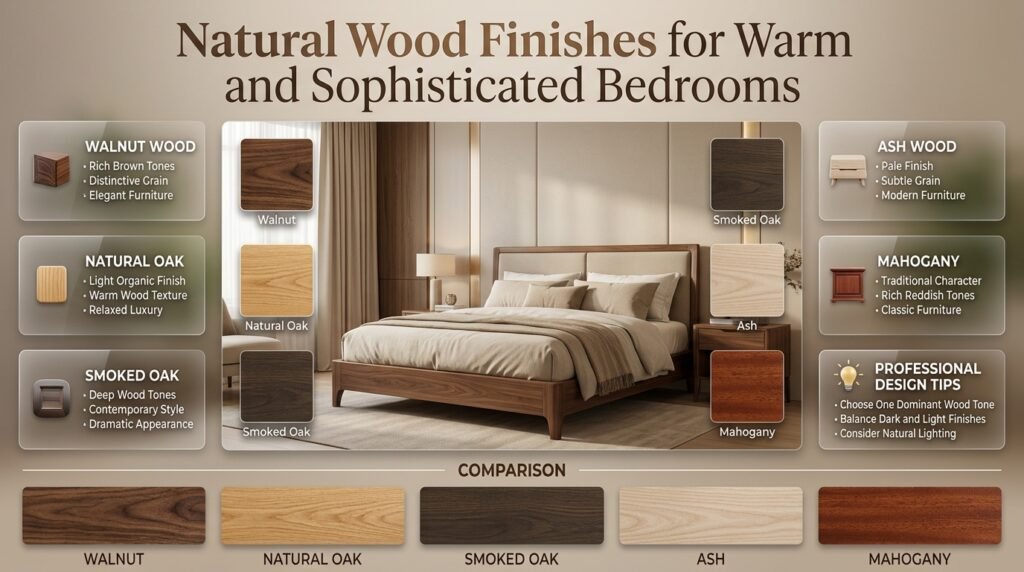
Wood remains one of the most versatile materials for luxury-inspired bedroom interiors. Its natural grain, color variations, and organic appearance introduce warmth that balances harder surfaces such as stone, glass, and metal.
Different wood finishes can produce very different atmospheres, so selecting the right tone is important.
Walnut for Rich and Elegant Interiors
Walnut is known for its deeper brown coloring and distinctive grain patterns. It creates a sense of richness without requiring excessive decoration.
It works particularly well for:
- Bed frames.
- Bedside cabinets.
- Dressing tables.
- Wardrobe doors.
- Decorative wall panels.
- Floating shelves.
Walnut pairs naturally with cream, beige, taupe, muted green, and warm grey.
For example, a walnut bed frame combined with ivory bedding and a soft beige rug creates a balanced contrast between dark furniture and light textiles.
One consideration is that using walnut across every major surface can make a smaller bedroom feel visually heavy. Introduce lighter materials to maintain openness.
Natural Oak for a Relaxed Luxury Appearance
Natural oak is a useful option for homeowners who prefer a lighter, more relaxed bedroom.
Its warm grain patterns work with contemporary, Scandinavian, Japandi, and organic interior styles.
Consider using oak for:
- Flooring.
- Bedside tables.
- Wardrobe details.
- Bed frames.
- Decorative wall features.
Light oak looks particularly attractive with linen, cotton, warm white paint, and subtle stone surfaces.
Smoked Oak for Contemporary Bedrooms
Smoked oak introduces darker tones and a more dramatic appearance while retaining the character of natural wood.
It works well with charcoal upholstery, warm beige walls, bronze hardware, and muted lighting.
However, consider the room’s natural light before choosing darker wood finishes for large furniture pieces.
Comparing Popular Wood Finishes
| Wood Finish | Visual Character | Best Application | Design Consideration |
|---|---|---|---|
| Walnut | Rich and warm | Bed frames and cabinets | Balance with lighter fabrics |
| Natural oak | Light and organic | Flooring and furniture | Works with neutral palettes |
| Smoked oak | Deep and contemporary | Accent furniture | Needs suitable lighting |
| Ash | Pale and subtle | Modern furniture | Avoid overly cool combinations |
| Mahogany | Traditional and rich | Classic furniture | Can feel heavy in small rooms |
Professional advice: Select one dominant wood tone before purchasing bedroom furniture. You can introduce a second complementary wood finish, but the undertones should relate to each other.
3. Marble and Natural Stone for Refined Bedroom Details
Natural stone introduces visual character through its patterns, surface variations, and distinctive finishes.
Marble is frequently associated with high-end interiors, but it doesn’t need to dominate a bedroom to create an elegant effect.
In fact, using stone selectively often produces a more balanced result.
White Marble for Bright and Refined Spaces
White marble with subtle grey veining can create a clean and sophisticated appearance.
It is suitable for:
- Bedside tables.
- Dressing table surfaces.
- Decorative furniture tops.
- Small architectural features.
- Selected wall details.
Pair it with warm wood and soft fabrics to prevent the room from appearing excessively cold.
Travertine for Natural Warmth
Travertine has a distinctive appearance with natural pores and earthy coloring.
Its warm beige and cream tones make it particularly useful in bedrooms designed around natural materials.
It works well with:
- Walnut furniture.
- Cream upholstery.
- Linen bedding.
- Warm plaster walls.
- Antique bronze accessories.
Unlike highly polished stone, travertine can introduce a softer, more organic appearance.
Limestone for Understated Elegance
Limestone offers a relatively subtle visual character. Its muted tones and natural texture make it suitable for calm, minimalist bedrooms.
It can be used for selected architectural surfaces and decorative details.
However, natural limestone requires appropriate maintenance because some varieties are porous and sensitive to particular cleaning products.
Natural Stone or Engineered Alternatives?
| Feature | Natural Marble | Engineered Stone | Porcelain |
|---|---|---|---|
| Appearance | Naturally varied | More consistent | Available in many patterns |
| Maintenance | Often requires careful care | Depends on composition | Generally straightforward |
| Pattern | Unique natural veining | Controlled appearance | Printed or manufactured patterns |
| Cost | Often higher | Varies | Wide price range |
| Suitable use | Accent surfaces | Selected furniture surfaces | Floors and wall applications |
Expert tip: Always check the manufacturer’s specifications before selecting a stone surface. Not every material is suitable for every application, and sealing or specialist installation may be necessary.
4. Premium Fabrics That Make Bedrooms Feel More Comfortable
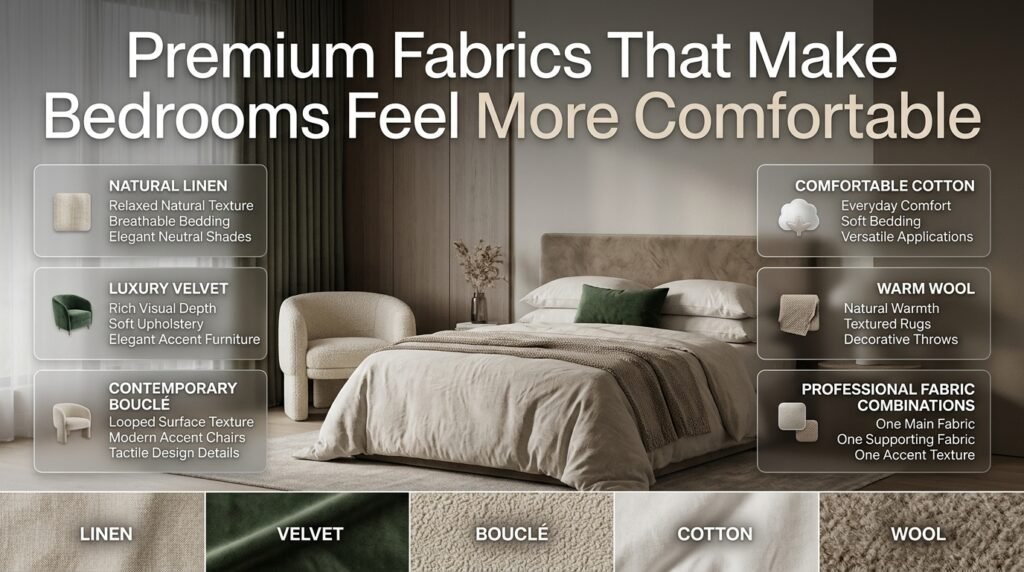
A luxury-inspired bedroom shouldn’t look beautiful only from a distance. It should also feel comfortable when you use it.
Fabrics play an important role because they introduce softness, absorb some sound, and create contrast against solid materials.
Three especially useful options are linen, velvet, and bouclé.
Linen for Relaxed Bedroom Styling
Linen is appreciated for its natural texture and relaxed appearance.
It works particularly well for bedding because its surface has a subtle irregularity that adds depth without creating a busy pattern.
Popular applications include:
- Duvet covers.
- Pillowcases.
- Curtains.
- Bed throws.
- Decorative cushions.
Natural linen is available in various neutral shades, including ivory, sand, oatmeal, and muted grey.
Its relaxed creases can be part of the overall aesthetic rather than something that needs to be eliminated.
However, linen wrinkles more easily than some synthetic alternatives. Consider this if you prefer perfectly smooth bedding.
Velvet for a Richer Appearance
Velvet introduces depth through its soft pile and light-reflecting qualities.
Depending on the fabric, its appearance can change slightly as the direction of the pile changes.
It is particularly useful for:
- Upholstered headboards.
- Accent chairs.
- Bedside benches.
- Decorative cushions.
Deep green, navy, taupe, dusty rose, and warm brown are useful choices.
For a balanced appearance, use velvet as a feature material rather than covering every upholstered item in the bedroom.
Bouclé for Contemporary Texture
Bouclé has a looped surface that introduces noticeable texture.
It works well in contemporary bedrooms, especially when paired with smooth wood and subtle stone finishes.
Common applications include:
- Accent chairs.
- Headboards.
- Upholstered benches.
- Decorative cushions.
Because bouclé has a distinctive texture, combining it with too many other heavily textured materials can make the bedroom feel crowded.
Which Fabric Should You Choose?
| Fabric | Main Benefit | Best Use | Potential Drawback |
|---|---|---|---|
| Linen | Natural appearance | Bedding and curtains | Wrinkles easily |
| Velvet | Rich visual depth | Headboards and chairs | Cleaning requirements vary |
| Bouclé | Tactile texture | Accent furniture | Can be harder to clean |
| Cotton | Everyday comfort | Bedding | Quality varies |
| Wool | Warmth and texture | Rugs and throws | May require specialist care |
The best combination often includes one main fabric, one supporting fabric, and a smaller accent texture.
5. Luxury Bedroom Color Palettes and Their Material Combinations
Color selection should happen alongside material selection rather than after all the furniture has been purchased.
The same wood finish can look completely different against warm cream walls compared with cool grey walls.
A coordinated bedroom palette usually includes:
- A dominant background color.
- A secondary supporting color.
- A furniture or natural material tone.
- A small accent finish.
Warm Beige, Walnut, and Brushed Brass
This combination creates a comfortable and sophisticated atmosphere.
Recommended materials:
- Warm beige painted walls.
- Walnut bedside tables.
- Cream linen bedding.
- Brushed brass lighting.
- Natural wood flooring.
- A soft wool rug.
The contrast between walnut and lighter fabrics creates visual depth without making the room feel too formal.
This is a particularly useful palette for homeowners who want a timeless appearance.
Charcoal, Black, and Natural Oak
For a more contemporary and dramatic bedroom, darker finishes can be introduced carefully.
Recommended materials:
- Charcoal feature wall.
- Black metal fittings.
- Smoked oak furniture.
- Light grey bedding.
- Natural oak flooring.
The lighter materials prevent the darker finishes from dominating the entire room.
This combination works particularly well in bedrooms with good natural lighting.
Sage Green, Cream, and Travertine
Sage green creates a calm and nature-inspired atmosphere.
Combine it with:
- Cream upholstered furniture.
- Light oak bedside tables.
- Travertine decorative surfaces.
- Natural linen bedding.
- Muted bronze details.
This palette is suitable for people who prefer organic interiors rather than highly polished contemporary designs.
Soft White, Pale Oak, and Warm Grey
This combination works well in minimalist bedrooms.
Use warm white walls, pale oak furniture, white cotton bedding, and warm grey accessories.
The result is simple, bright, and relatively easy to update.
Deep Navy, Walnut, and Soft Ivory
For a more dramatic bedroom, deep navy can be introduced through an upholstered headboard or accent wall.
Walnut furniture adds warmth, while ivory bedding provides contrast.
Use metallic details sparingly to avoid making the room feel overly decorative.
Material Palette Comparison
| Color Palette | Main Materials | Atmosphere | Suitable Bedroom |
|---|---|---|---|
| Beige and walnut | Linen, walnut, brass | Warm and elegant | Traditional and contemporary |
| Charcoal and oak | Wood, metal, cotton | Dramatic and modern | Larger or well-lit rooms |
| Sage and cream | Travertine, linen, oak | Calm and organic | Relaxed bedrooms |
| White and pale oak | Cotton, wood, wool | Light and minimal | Small bedrooms |
| Navy and walnut | Velvet, walnut, ivory | Rich and dramatic | Statement bedrooms |
6. Statement Headboards and Luxury Wall Materials
The wall behind the bed is often the main visual focus of a bedroom.
A carefully selected headboard or wall treatment can establish the entire material direction.
However, the feature should complement the bed, bedside furniture, and ceiling height.
Upholstered Headboards
Upholstered headboards introduce softness and provide a comfortable surface when sitting up in bed.
Common material options include:
- Linen.
- Velvet.
- Cotton blends.
- Performance upholstery fabrics.
- Leather.
Choose a fabric that complements the bedding rather than matching every element exactly.
For example, a taupe upholstered headboard can work beautifully with ivory bedding and walnut bedside tables.
Fluted Wall Panels
Fluted panels create vertical lines that add architectural interest.
They can make a headboard wall appear taller and introduce texture without relying on complicated decorative patterns.
Wood-effect panels are particularly useful for contemporary bedrooms.
However, check the panel depth and installation requirements before using them in a narrow room.
Fabric Wall Panels
Fabric panels can create a soft, continuous background behind the bed.
They are particularly suitable for bedrooms where comfort and a quieter atmosphere are priorities.
Select an appropriate fabric with practical cleaning requirements.
Textured Plaster Finishes
Textured plaster provides subtle surface variation and can make neutral walls more interesting.
It works well with natural wood, stone, and linen.
For additional inspiration on coordinating wall finishes and paint choices, explore Paint Color.
Choosing Between Wall Materials
| Wall Material | Visual Effect | Maintenance | Best Application |
|---|---|---|---|
| Painted plaster | Clean and flexible | Generally easy | Entire bedroom |
| Wood panels | Warm and architectural | Depends on finish | Bed wall |
| Fabric panels | Soft and comfortable | Requires care | Headboard area |
| Textured plaster | Subtle and organic | Depends on coating | Feature walls |
| Decorative wallpaper | Pattern and character | Depends on product | Selected walls |
7. Metallic Finishes for Subtle Luxury
Metallic finishes can make a bedroom feel more complete when they are used thoughtfully.
They are often most effective in smaller details rather than large decorative installations.
Brushed Brass
Brushed brass introduces warmth and works particularly well with beige, walnut, cream, and muted green.
Use it for bedside lamps, cabinet handles, and selected furniture fittings.
Antique Bronze
Antique bronze has a deeper, more traditional appearance.
It works well with darker wood, natural stone, and classic upholstery.
Champagne Gold
Champagne gold is softer than highly polished gold.
It can introduce a subtle decorative detail without becoming the main focus.
Matte Black
Matte black offers a contemporary contrast against lighter materials.
It works well for lamp frames, furniture legs, and selected hardware.
Polished Chrome
Polished chrome creates a brighter and more reflective appearance.
It is suitable for modern bedrooms, although too many reflective surfaces can make the overall design feel cold.
Professional recommendation: Limit the number of prominent metallic finishes. Two complementary finishes are generally easier to coordinate than several unrelated options.
8. Flooring Materials That Support a Luxury Bedroom Design
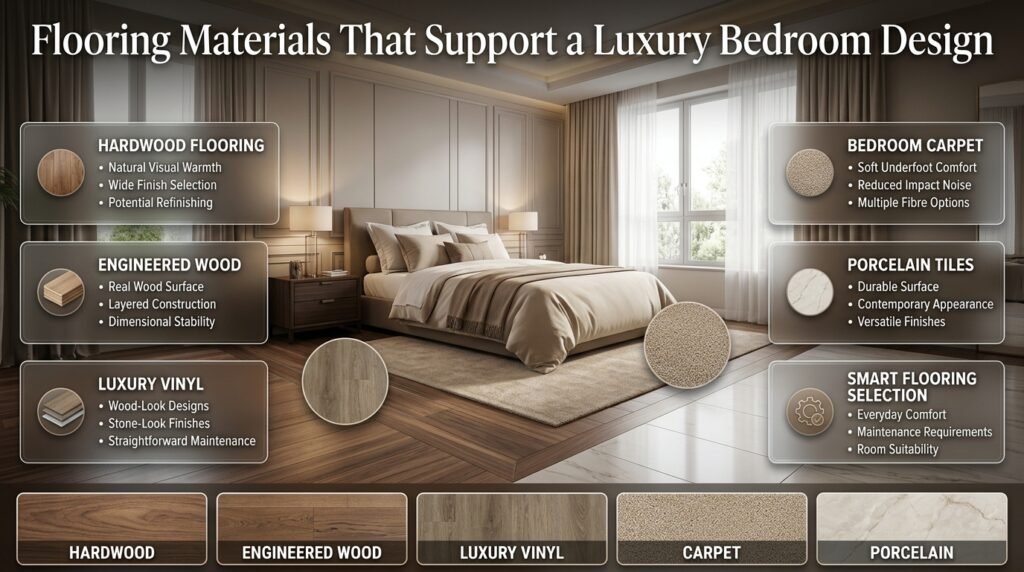
Flooring is one of the largest material decisions in a bedroom because it influences furniture selection, comfort, color balance, and maintenance.
Choose flooring according to how the room is used rather than appearance alone.
Hardwood Flooring
Hardwood offers natural grain patterns and a long-lasting appearance when properly maintained.
Its benefits include:
- Natural visual warmth.
- A wide selection of finishes.
- Potential refinishing.
- Compatibility with different furniture styles.
However, hardwood can be affected by moisture, scratching, and changes in indoor humidity.
Engineered Wood Flooring
Engineered wood offers a real wood surface supported by a layered construction.
It can provide a useful alternative where dimensional stability is important.
Product construction and installation requirements vary, so compare specifications carefully.
Luxury Vinyl Flooring
Luxury vinyl is available in wood-look and stone-look designs.
It can be useful for homeowners who want an attractive surface with relatively straightforward maintenance.
However, product quality, wear layers, installation requirements, and moisture suitability differ between options.
Bedroom Carpet
Carpet provides a softer surface and can make getting out of bed more comfortable.
It also helps reduce some impact noise.
Consider:
- Fibre type.
- Pile height.
- Cleaning requirements.
- Durability.
- Suitability for household members and pets.
Porcelain Tiles
Porcelain can create a sophisticated appearance in contemporary bedrooms.
Its durability and range of finishes make it versatile, but the surface may feel cold underfoot.
Use an appropriate rug where additional warmth is needed.
9. Window Treatments and Soft Furnishings
Window treatments are sometimes treated as an afterthought, but they can significantly influence a bedroom’s final appearance.
Curtains, blinds, and decorative fabrics should relate to the furniture, bedding, and wall finishes.
Linen Curtains
Linen curtains create a relaxed and natural appearance.
They work especially well with pale oak, warm beige, and organic material palettes.
Depending on the fabric weight and construction, they may not provide sufficient privacy or light control on their own.
Velvet Curtains
Velvet curtains introduce a richer appearance and can be useful when additional visual weight is desirable.
Their suitability depends on the room’s proportions and available daylight.
Layered Window Treatments
Combining sheer curtains with blackout window treatments provides flexibility.
Sheer materials soften daylight, while blackout options help control brightness when sleeping.
When choosing window treatments, consider:
- Window dimensions.
- Curtain length.
- Fabric weight.
- Privacy requirements.
- Cleaning instructions.
- Existing lighting conditions.
For further guidance on how daylight affects interior decisions, read Natural Light and Floor Plan Orientation.
10. Lighting and Its Relationship With Bedroom Materials
Lighting doesn’t simply make a bedroom visible. It changes how colors, textures, and surfaces are perceived.
A beige wall can appear warmer under one light source and noticeably cooler under another.
This is why material samples should always be checked under the lighting conditions that will actually be used.
Ambient Lighting
Ambient lighting provides general illumination.
It may come from ceiling fixtures, recessed lighting, or indirect lighting systems.
Its purpose is to make the bedroom comfortable to move around in.
Task Lighting
Task lighting supports specific activities.
Examples include bedside reading lamps and lighting around dressing areas.
Choose fixtures that provide sufficient illumination without creating unnecessary glare.
Accent Lighting
Accent lighting highlights selected design features.
It can draw attention to:
- Textured wall panels.
- Decorative stone.
- Artwork.
- Architectural details.
- Selected furniture features.
Why Color Temperature Matters
Warm lighting generally creates a more relaxed atmosphere, while cooler lighting can make certain materials appear sharper or less warm.
Rather than choosing lighting based only on appearance, consider how it affects your selected finishes.
Explore Japandi Lighting Composition for additional ideas about balanced lighting and material presentation.
11. How to Create a Celebrity-Inspired Bedroom Material Palette Step by Step
A structured selection process makes bedroom design easier and helps prevent expensive changes later.
Step 1: Identify Your Preferred Design Direction
Before selecting materials, decide how you want the bedroom to feel.
Possible directions include:
- Warm and comfortable.
- Modern and minimal.
- Natural and organic.
- Dramatic and sophisticated.
- Classic and timeless.
What to do: Select three descriptive words that represent your preferred atmosphere.
Why it matters: These words provide a simple reference point when comparing furniture, flooring, and fabric options.
Professional advice: Use the same design direction when selecting permanent finishes and decorative accessories.
Common mistake: Choosing products simply because they look attractive individually.
Quick example: If your preferred direction is warm, natural, and elegant, walnut, cream linen, and travertine may be suitable starting points.
Step 2: Evaluate the Existing Bedroom
Check the bedroom before deciding which materials to purchase.
Measure the room and identify:
- Existing flooring.
- Wall dimensions.
- Ceiling height.
- Window positions.
- Natural light direction.
- Electrical points.
- Bed dimensions.
- Wardrobe and storage requirements.
Why it matters: Existing features influence which materials will work practically.
For example, a dark furniture finish may be attractive, but it could make a poorly lit room feel smaller.
Step 3: Select the Dominant Material
Choose one main material that will establish the design.
This might be walnut furniture, oak flooring, a fabric headboard, or a distinctive stone surface.
What to do: Select the material that will have the greatest visual influence.
Why it matters: It provides a starting point for choosing supporting finishes.
Professional advice: Avoid making every material equally prominent. A clear hierarchy produces a more controlled result.
Step 4: Build the Color Palette
Choose a background color, supporting color, and accent tone.
For example:
- Background: Warm white.
- Supporting: Walnut brown.
- Secondary: Soft beige.
- Accent: Brushed brass.
Why it matters: A controlled palette makes it easier to coordinate materials from different manufacturers.
Common mistake: Selecting colors from separate product photographs without comparing their undertones.
Step 5: Introduce Texture
Add fabrics and surface treatments that balance the dominant material.
For example, combine smooth painted walls with textured linen, soft upholstery, and natural wood.
Professional advice: Use texture to create depth rather than adding more colors unnecessarily.
Step 6: Compare Physical Samples
Request samples of flooring, paint, upholstery, and decorative surfaces.
Place them together in the bedroom.
Observe them under morning daylight, afternoon sunlight, and evening lighting.
Why it matters: Materials often look different in showrooms and online photographs.
Common mistake: Ordering large quantities before checking samples in the actual room.
Step 7: Review Maintenance and Durability
Check how each material will perform in everyday use.
Ask:
- Does the surface require sealing?
- Can the fabric be cleaned easily?
- Is the flooring suitable for the room?
- Will the finish scratch easily?
- Does the material need specialist installation?
Professional advice: Consider long-term ownership costs rather than comparing purchase prices alone.
Step 8: Finalize the Complete Palette
Before ordering, review all selected materials together.
Your final collection should include:
- Flooring.
- Wall finish.
- Main furniture finish.
- Headboard fabric.
- Bedding colors.
- Window treatment.
- Metallic details.
- Lighting finishes.
Only proceed when the complete combination feels coordinated.
12. How to Recreate Luxury Bedroom Designs on a Realistic Budget

A sophisticated bedroom doesn’t require premium natural materials across every surface.
The most effective strategy is to spend more on important, frequently used elements and select suitable alternatives for decorative features.
Choose Veneer Instead of Solid Wood
Quality wood veneer can provide an attractive natural appearance without the cost of solid hardwood furniture.
However, examine the construction and edge finishing before purchasing.
Consider Porcelain Instead of Natural Marble
Marble-effect porcelain can reproduce some of the visual qualities of natural stone.
It is available in numerous patterns and finishes.
Choose a realistic design rather than an exaggerated pattern that dominates the bedroom.
Invest in Quality Bedding
Bedding covers a large visual area and directly influences everyday comfort.
Prioritize fabric quality, appropriate sizing, and a comfortable mattress.
Update Existing Furniture
Replacing every item isn’t always necessary.
You may be able to improve existing furniture through:
- New cabinet handles.
- Better finishing.
- Reupholstery.
- Updated lighting.
- Improved storage.
- Carefully selected decorative details.
For practical renovation guidance, explore Home Improvement.
Use DIY Improvements Carefully
Some decorative changes can be completed without major renovation work.
For example, installing suitable floating shelves, refreshing wall paint, or updating cabinet hardware can improve the overall appearance.
Explore DIY Home Projects for additional inspiration.
The key is to understand which work can safely be completed yourself and which installations require a qualified professional.
13. Common Mistakes When Selecting Bedroom Materials
A bedroom can contain expensive materials and still look poorly coordinated.
Most problems occur when homeowners focus on individual products rather than the complete room.
Choosing Too Many Competing Materials
This usually happens when different furniture items are purchased without a consistent plan.
The result is a bedroom with too many wood tones, metal finishes, and unrelated textures.
How to avoid it: Establish a dominant material and limit additional finishes to those that genuinely complement it.
Using Dark Materials Without Considering Natural Light
Dark wood, charcoal walls, and heavy curtains can make a bedroom feel visually enclosed.
This is especially noticeable in small rooms with limited daylight.
How to avoid it: Balance dark surfaces with lighter bedding, appropriate lighting, and carefully selected reflective finishes.
Selecting Materials Only From Photographs
Product images rarely show exactly how a finish will look in every home.
Photography lighting, editing, and screen settings can affect perceived colors.
How to avoid it: Request samples and evaluate them in the actual bedroom.
Overusing Metallic and Glossy Surfaces
Too many polished surfaces can make a bedroom feel visually busy.
How to avoid it: Combine selected reflective details with matte wood, textured fabrics, and understated wall finishes.
Ignoring Practical Maintenance
Some natural materials require specialist cleaning or periodic sealing.
How to avoid it: Review product instructions and consider your household’s cleaning routine before purchasing.
Choosing Style Over Comfort
A bedroom should support rest and everyday activities.
An attractive but uncomfortable chair, difficult-to-clean headboard, or unsuitable flooring can become frustrating over time.
How to avoid it: Evaluate comfort, durability, and practical use alongside appearance.
Forgetting the Relationship Between Adjacent Spaces
Bedrooms that connect to dressing areas or ensuites should have a coordinated design transition.
Completely unrelated flooring, hardware, and color choices can make the transition feel disconnected.
How to avoid it: Repeat selected finishes and maintain a related color direction without making both spaces identical.
14. Professional Techniques for a More Refined Bedroom
Experienced interior planning often involves editing and refining rather than adding more materials.
These techniques help create a sophisticated appearance while keeping the room functional.
Establish a Visual Hierarchy
Every bedroom needs a focal point.
It might be the headboard wall, a distinctive bed frame, or a carefully selected furniture arrangement.
Allow the main feature to attract attention while supporting finishes remain relatively understated.
Repeat Materials Strategically
Repeating one material in different parts of the room creates continuity.
For example, walnut can appear in bedside furniture and wardrobe details, while brushed brass can be repeated in lighting and handles.
The repetition should feel natural rather than excessive.
Balance Hard and Soft Surfaces
A bedroom filled with wood, stone, and metal may feel too rigid.
Introduce linen, cotton, wool, and upholstered furniture to create a more comfortable atmosphere.
Pay Attention to Scale
Material patterns should suit the room’s dimensions.
Large-scale patterns may overwhelm a narrow bedroom, while very subtle textures can disappear across large surfaces.
Choose finishes that remain visually appropriate from both close and distant viewing positions.
Use Negative Space
Not every wall or furniture surface needs decoration.
Leaving some areas visually quiet helps important materials stand out.
This is particularly valuable in minimalist and contemporary bedroom interiors.
Coordinate the Bedroom With the Rest of the Home
A bedroom doesn’t need to copy the living room, but related finishes can create a more cohesive property.
For additional guidance, read Interior Design.
15. Designing Bedrooms Around Different Lifestyle Requirements
A successful material palette should reflect how people actually use their bedrooms.
The most attractive design isn’t necessarily the most suitable one for every household.
Bedrooms for Couples
Shared bedrooms need a balance between personal preferences and practical comfort.
Choose neutral foundational materials and introduce individual preferences through smaller decorative details.
For example, walnut furniture and beige walls can provide a shared foundation while each side of the bed has its own lighting and storage.
Bedrooms for Families
Family bedrooms may need more durable materials and easier cleaning arrangements.
Consider:
- Washable bedding.
- Durable flooring.
- Practical furniture finishes.
- Easy-to-clean upholstery.
- Secure furniture installation.
Avoid delicate decorative surfaces in areas where they may be frequently exposed to damage.
Bedrooms for Small Homes
Small bedrooms benefit from visual simplicity.
Choose lighter materials for large surfaces and introduce darker finishes through smaller furniture items.
Wall-mounted bedside storage and appropriately scaled furniture can also preserve useful floor space.
Bedrooms for People Who Prefer Minimalist Interiors
Minimalist bedrooms depend on proportion, material quality, and controlled decoration.
Use a limited number of finishes and pay attention to the details of each one.
A combination of pale oak, warm white, natural linen, and subtle stone can create an attractive result without requiring elaborate accessories.
Bedrooms Designed for Relaxation
For a calming atmosphere, prioritize comfortable fabrics, warm colors, and gentle lighting.
Natural materials and simple furniture shapes can help create a bedroom that feels less visually demanding.
16. Coordinating Bedroom Materials With Storage and Furniture
Storage furniture has a major influence on the bedroom’s material palette.
Wardrobes, drawers, bedside cabinets, and dressing tables occupy significant visual space, so their finishes should be considered early.
Wardrobe Finishes
Popular choices include:
- Natural wood veneer.
- Matte painted finishes.
- Textured laminate.
- Frosted glass.
- Selected metallic details.
Choose a finish that relates to the bed frame or flooring.
Bedside Furniture
Bedside tables don’t have to match the bed exactly.
A walnut bed can work with cream bedside cabinets, while a neutral upholstered bed can be complemented by darker wood tables.
The important consideration is maintaining a consistent overall design direction.
Dressing Tables
Dressing tables can introduce a different material without disrupting the palette.
For example, a light stone surface can complement walnut storage furniture when both share warm undertones.
For more practical ideas about making bedroom storage visually appealing, explore Styling Open Shelves Without Clutter.
Planning Furniture Before Purchasing Materials
Always consider furniture dimensions and movement requirements.
A beautiful material combination cannot compensate for a bedroom where drawers cannot open properly or walking areas are restricted.
Plan the layout before finalizing major purchases.
17. Renovation Planning: Getting the Materials Installed Correctly
Even the best material palette can disappoint when installation is rushed or poorly coordinated.
Before beginning a bedroom renovation, prepare a clear list of materials, specifications, and work requirements.
Prepare a Material Schedule
A material schedule should identify:
- Product or material type.
- Selected finish.
- Color reference.
- Required dimensions.
- Quantity.
- Supplier information.
- Installation requirements.
- Maintenance instructions.
This makes it easier to communicate with contractors and compare quotations.
Confirm Material Samples Before Installation
Do not rely on verbal descriptions such as warm beige, natural oak, or brushed gold.
Use approved samples and clearly identify the selected products.
This helps prevent misunderstandings during purchasing and installation.
Coordinate Different Trades
Bedroom renovations may involve painters, electricians, flooring installers, carpenters, and upholstery specialists.
Their work should follow a coordinated sequence.
For example, electrical points for bedside lighting should be checked before wall panels and headboards are installed.
Record Changes During Renovation
If a selected material becomes unavailable or a specification needs to change, record the revised choice.
This prevents different contractors from working with conflicting information.
Our guide to Renovation Work Order for Homeowners provides further guidance on organizing residential improvement work.
For more ideas about current interior trends and practical decorating decisions, explore Latest News DecoratorAdvice.
18. Maintaining Your Bedroom Material Palette Over Time
A well-designed bedroom should remain attractive after months and years of everyday use.
Maintenance is therefore an important part of material selection.
Wood Furniture Maintenance
Dust regularly using a suitable soft cloth.
Avoid excessive moisture and use cleaning products recommended for the particular finish.
Protect furniture from prolonged exposure to direct sunlight where possible.
Upholstery Maintenance
Follow the manufacturer’s cleaning instructions.
Vacuum appropriate fabrics gently and address spills promptly using suitable cleaning methods.
For valuable or delicate upholstery, professional cleaning may be the safest option.
Natural Stone Maintenance
Use cleaners specifically approved for the stone type.
Avoid acidic products on surfaces that may be sensitive to them.
Check whether sealing is recommended and follow the supplier’s maintenance schedule.
Flooring Maintenance
Different flooring materials have different requirements.
Use suitable cleaning products and protect vulnerable surfaces from scratches, moisture, and unnecessary wear.
Keeping the Design Fresh
You don’t need to replace permanent materials to update a bedroom.
Small changes can refresh the appearance:
- Change decorative cushions.
- Introduce a seasonal bed throw.
- Replace selected accessories.
- Update bedside lamps.
- Change artwork.
- Refresh curtains when necessary.
Keeping the main materials relatively timeless makes these updates easier and more affordable.
What materials are most commonly used in luxury celebrity-inspired bedrooms?
Luxury celebrity-inspired bedrooms often combine natural materials, premium upholstery, and carefully selected decorative finishes. Walnut, natural oak, marble, travertine, velvet, linen, and brushed brass are popular choices because they introduce warmth, texture, and sophistication without making the bedroom feel overly decorated.
The secret is not using every expensive material in one room. It’s choosing a few finishes that complement each other. For example, a walnut bed frame, cream linen bedding, a velvet headboard, and brushed brass bedside lighting can create an elegant appearance while keeping the overall design comfortable and practical.
Important material choices include:
Walnut and natural oak: Add warmth and natural character to bedroom furniture.
Marble and travertine: Introduce refined patterns and distinctive surface details.
Velvet upholstery: Creates depth and a luxurious appearance.
Linen and cotton: Provide softness and everyday comfort.
Brushed brass: Adds subtle elegance through lighting and hardware.
How can I create a celebrity-inspired luxury bedroom on a limited budget?
Creating a luxury-inspired bedroom doesn’t require purchasing expensive designer furniture or covering every surface with natural stone. The better approach is to invest in the elements that have the greatest visual impact and use affordable alternatives for supporting details.
Start with the bed, headboard, bedding, and main furniture finishes. These elements influence the bedroom’s appearance more than small decorative accessories. Quality wood veneer can provide the appearance of natural wood, while marble-effect porcelain offers an attractive alternative to genuine marble.
You can also improve existing furniture by replacing outdated handles, updating upholstery, introducing coordinated bedding, and improving bedside lighting.
Practical ways to save money include:
Choose quality wood veneer instead of expensive solid walnut furniture.
Use marble-effect porcelain for selected decorative surfaces.
Invest in attractive, comfortable bedding.
Refresh existing furniture instead of replacing everything.
Introduce luxury through lighting, curtains, and carefully selected accessories.
Which color combinations make a bedroom look expensive and sophisticated?
A sophisticated bedroom usually combines a dominant neutral shade with complementary natural materials and a controlled accent color. Warm beige, cream, taupe, ivory, walnut brown, sage green, and soft grey are particularly versatile because they work with different furniture styles and lighting conditions.
For a timeless appearance, combine warm beige walls with walnut furniture, cream bedding, and brushed brass details. If you prefer a more contemporary bedroom, charcoal, black, and natural oak can create a dramatic contrast. Sage green with travertine and light oak is another attractive choice for a calm, nature-inspired environment.
Five combinations worth considering:
Beige + walnut + brass: Warm, elegant, and timeless.
Cream + pale oak + warm grey: Bright and minimalist.
Sage green + travertine + ivory: Natural and relaxing.
Charcoal + smoked oak + light grey: Modern and dramatic.
Navy + walnut + soft ivory: Rich and sophisticated.
Before finalizing your palette, test paint, fabric, and wood samples under the bedroom’s actual lighting. This helps prevent unexpected color differences after installation.
How do I combine different bedroom materials without making the room look cluttered?
The most effective way to combine bedroom materials is to establish a clear visual hierarchy. Choose one dominant material, introduce two or three supporting finishes, and use smaller decorative details to complete the design. This creates variety without making every surface compete for attention.
For example, if walnut is your dominant material, you can complement it with cream upholstery, natural linen, a travertine bedside surface, and subtle bronze hardware. Each finish contributes something different while maintaining a consistent warm color direction.
Texture is equally important. Smooth wood, soft velvet, natural linen, and lightly textured walls can create visual depth even when the bedroom uses only a few colors.
Professional tips for maintaining balance:
Select one dominant wood or furniture finish.
Keep large surfaces within a coordinated color family.
Combine hard materials with softer fabrics.
Limit highly reflective metallic finishes.
Repeat selected materials in different parts of the room.
Leave some surfaces undecorated to preserve visual space.
What should I consider when choosing bedroom materials for long-term durability and maintenance?
The best bedroom materials should balance appearance, comfort, durability, and maintenance. A finish might look beautiful in a showroom but become inconvenient when it requires frequent specialist cleaning or cannot withstand everyday use.
Consider how frequently the bedroom is used, whether children or pets share the space, how much natural light enters the room, and how much time you’re willing to spend maintaining different surfaces.
For example, quality wood veneer can be suitable for furniture when properly manufactured and maintained. Washable cotton bedding offers everyday practicality, while velvet upholstery may require more careful cleaning depending on its composition.
Before purchasing any major material, check:
Durability: Will it withstand regular everyday use?
Maintenance: Does it require special cleaning products or treatments?
Moisture resistance: Is it suitable for the intended location?
Light exposure: Could direct sunlight affect its color?
Repair options: Can scratches, stains, or surface damage be addressed?
Manufacturer guidance: Are installation and maintenance instructions clearly provided?
A little research before purchasing can prevent expensive replacements and help your bedroom maintain its sophisticated appearance for years.
Conclusion
Creating a beautiful bedroom inspired by celebrity interiors is not simply about choosing expensive furniture or copying a luxurious design. The real difference comes from selecting the right materials, combining textures thoughtfully, and creating a balanced atmosphere that feels comfortable, elegant, and personal. From natural wood and marble-inspired finishes to velvet upholstery, soft linens, metallic accents, and carefully chosen paint colors, every material contributes to the overall character of the space.
The most successful celebrity bedroom material palettes bring visual appeal and everyday practicality together. A statement headboard can add sophistication, layered fabrics can introduce warmth, and natural finishes can make the room feel timeless rather than overly decorative. Even with a limited budget, you can achieve a refined result by investing in a few quality elements, choosing complementary textures, and avoiding unnecessary decoration.
Before making your final selections, consider how each material will look under your bedroom’s lighting, how it will work with existing furniture, and how much maintenance it requires. Prioritize comfort, durability, and a consistent color palette instead of following every passing trend.
Ultimately, a well-designed bedroom should reflect your personal taste while offering the calm, inviting environment you need every day. With thoughtful material choices and a clear design direction, you can create a sophisticated bedroom that captures the elegance of celebrity interiors without sacrificing comfort or practicality.