
Introduction
Luxury Ambience | Luxury ambience is one of those design qualities that people notice immediately but often struggle to explain. You can walk into a room with expensive furniture and still feel that something is missing. Then you can enter a simpler home with modest furniture, warm lighting, beautiful textures, and thoughtful details and instantly feel that it looks sophisticated.
The difference isn’t always the price of the furniture.
It’s the way everything works together.
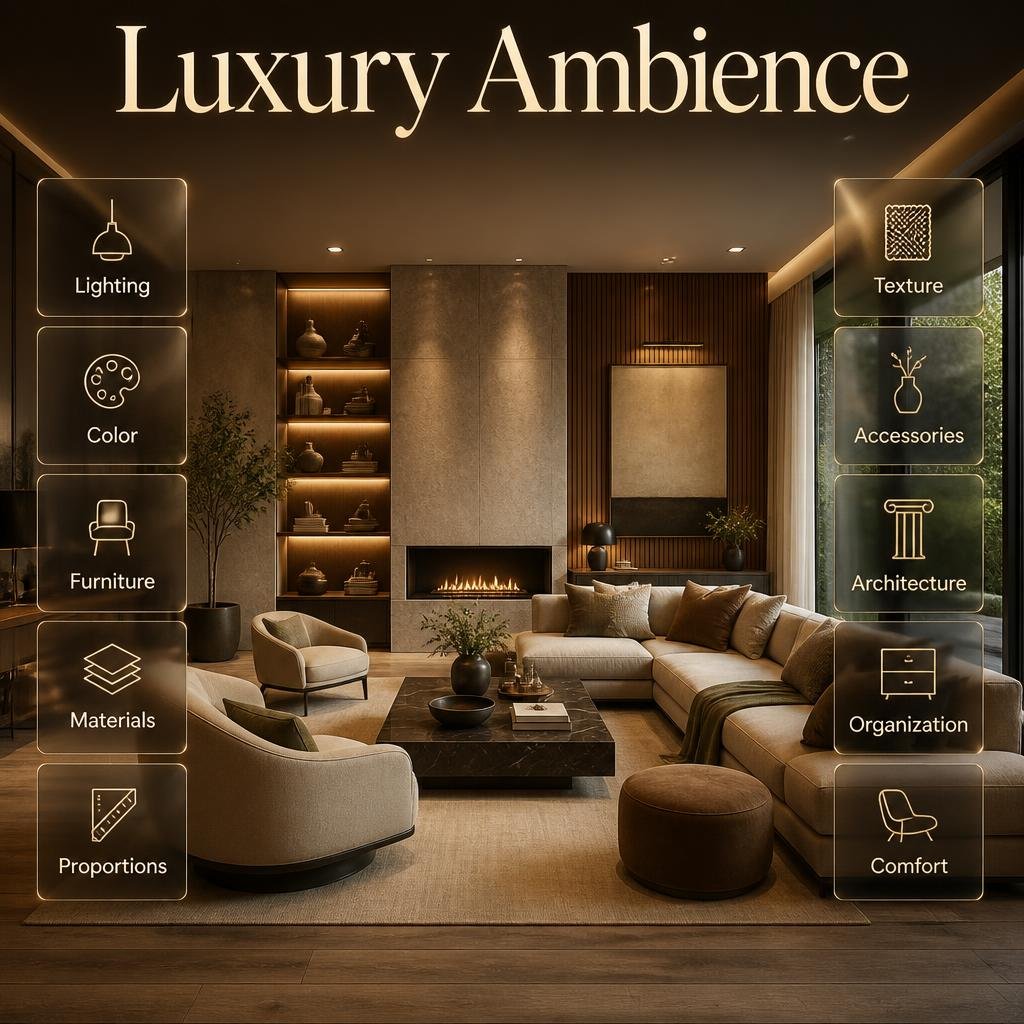
A successful luxury ambience comes from the relationship between lighting, color, furniture, materials, proportions, texture, accessories, architecture, organization, and comfort. When those elements are carefully balanced, even an ordinary room can feel polished and memorable.
For homeowners interested in creating a more refined environment, DesignMode24 Interior Design provides a useful starting point for exploring broader interior-design ideas without treating luxury as simply a matter of buying expensive products.
This guide explains how to create luxury ambience throughout your home, what design decisions make the biggest difference, which mistakes reduce the premium feeling, and how to achieve an elegant result without making the space look artificial or overdecorated.
What Is Luxury Ambience in Interior Design?
Luxury ambience is the overall feeling of refinement, comfort, visual harmony, and quality created by a carefully coordinated interior. It isn’t dependent on expensive furniture alone. Instead, it develops through balanced lighting, sophisticated materials, controlled colors, appropriate furniture proportions, tactile textures, thoughtful accessories, and a sense of visual calm.
A luxurious room should feel intentional.
Nothing needs to scream for attention. Instead, the eye should naturally move from one element to another.
Think about a high-end hotel lobby. The experience rarely comes from one extraordinary object. It comes from the combination of comfortable seating, architectural details, carefully selected artwork, atmospheric lighting, quality materials, controlled acoustics, and enough empty space to let everything breathe.
The same principle can be applied at home.
Luxury ambience can be:
- Warm and inviting
- Modern and sophisticated
- Minimal and peaceful
- Dramatic and elegant
- Traditional and timeless
- Contemporary and artistic
- Soft and understated
The style can change, but the underlying principles remain similar: quality, balance, proportion, restraint, and comfort.
Why Does Luxury Ambience Matter?
A home isn’t experienced only through its appearance. We experience it through movement, light, texture, sound, comfort, and atmosphere.
A well-designed luxurious environment can make everyday activities feel more enjoyable. Morning coffee feels different in a calm kitchen. Evening conversations feel more comfortable in a softly lit living room. A bedroom with controlled colors and layered textures can feel much more relaxing than one filled with visual distractions.
Luxury ambience also improves the perceived quality of a space.
This is important because the human eye responds strongly to:
- Symmetry and balance
- Material consistency
- Clean lines
- Appropriate scale
- Repetition
- Contrast
- Negative space
- Lighting hierarchy
- Texture
- Visual organization
This means you don’t necessarily need to replace everything in your home.
Sometimes the biggest improvement comes from editing what already exists.
💡 Pro Tip: Before buying anything new, photograph the room from several angles. You’ll often notice clutter, awkward furniture placement, excessive accessories, or empty areas that aren’t obvious when you’re standing inside the space.
What Makes a Home Feel Luxurious?
Several design elements contribute to luxury ambience, but the most important ones are connected rather than isolated.
1. A Controlled Color Palette
Luxury interiors usually have a clear relationship between their colors.
That doesn’t mean every room needs to be beige or white. Deep green, navy, charcoal, terracotta, chocolate brown, muted blue, and other richer colors can create sophisticated environments when balanced correctly.
The key is consistency.
A useful approach is to choose:
- One dominant color family
- One or two supporting tones
- A limited number of accents
- Natural tones from wood, stone, or plants
This prevents visual competition.
If you are working with paint, don’t choose wall colors independently from the rest of the room. Consider flooring, furniture, daylight, artificial lighting, curtains, and fixed architectural materials at the same time.
Your site’s Paint Color resource can naturally support this stage of the design process.
2. High-Quality-Looking Materials
Luxury is strongly associated with material quality, but quality doesn’t always mean the most expensive material available.
The way a material is used matters just as much.
Natural wood can add warmth.
Stone can provide visual permanence.
Linen can soften a room.
Glass can introduce lightness.
Metal can create structure and contrast.
Wool can add comfort and depth.
A sophisticated room often combines several of these materials instead of covering everything in one finish.
3. Proper Furniture Proportion
Furniture must fit the room.
A beautiful oversized sofa can make a small living room feel cramped. A tiny coffee table can look disconnected from a large sectional. Dining chairs that are too bulky can make circulation difficult.
Before purchasing furniture, measure:
- Room length and width
- Ceiling height
- Door openings
- Window positions
- Existing furniture
- Walking paths
- Rug size
- Clearance between furniture pieces
Good proportions create a feeling of confidence.
Poor proportions make even expensive furniture look out of place.
How Does Lighting Create Luxury Ambience?

Lighting is one of the most powerful tools for creating a sophisticated atmosphere because it affects both the appearance and emotional experience of a room.
A single bright ceiling fixture rarely creates the depth associated with high-end interiors.
Instead, think in layers.
Ambient Lighting
This provides general illumination.
Examples include:
- Ceiling fixtures
- Recessed lights
- Architectural lighting
- Large central fixtures
Task Lighting
This provides focused illumination for specific activities.
Examples include:
- Reading lamps
- Kitchen work lights
- Desk lamps
- Vanity lighting
Accent Lighting
This highlights selected features.
Examples include:
- Artwork
- Shelving
- Architectural details
- Plants
- Textured walls
The combination creates depth.
During the day, natural daylight may dominate the room. At night, smaller pools of warm light can create a completely different atmosphere.
⭐ Expert Tip: Don’t select a light fixture only because it looks impressive. Check its scale, brightness, light distribution, bulb temperature, and relationship with nearby furniture.
For homeowners exploring ceiling fixtures, layered illumination, and architectural lighting ideas, Lighting and Ceiling Ideas can provide additional design context.
How Do Materials and Textures Build a Luxury Look?
Texture is often what separates a flat interior from a sophisticated one.
Imagine a living room where every surface is smooth and visually similar. Even if the colors are beautiful, the room may feel one-dimensional.
Now introduce:
- Linen curtains
- A textured rug
- Natural wood
- Soft upholstery
- Stone
- Ceramic
- Woven accessories
- Brushed metal
- Glass
Suddenly, the room becomes more interesting.
A useful formula is:
Smooth + soft + rough + reflective + natural
You don’t need every texture in every room. The goal is to create enough variation to keep the space visually and physically interesting.
For example, a polished stone coffee table becomes more welcoming when paired with a soft rug and upholstered seating.
Likewise, a minimalist bedroom becomes richer when smooth furniture is balanced with linen bedding, woven accessories, and soft curtains.
Why Are Refined Finishes Important?
Finishes are the details people may not consciously identify but often notice emotionally.
Cabinet hardware, door handles, faucets, trim, wall treatments, furniture legs, lighting finishes, and decorative surfaces all contribute to the overall impression.
If a room has beautiful furniture but poorly coordinated hardware, the design can feel incomplete.
Similarly, mixing too many unrelated metallic finishes can make a room appear disconnected.
This doesn’t mean every metal must match perfectly.
Instead, create a deliberate relationship.
For example:
- Brass lighting
- Warm bronze hardware
- Natural wood
- Cream upholstery
can create a cohesive warm palette.
For a deeper look at surface quality and finishing decisions, Refined Finishes is a natural supporting resource.
How Can Furniture Styling Improve Luxury Ambience?
Furniture should create both comfort and visual structure.
Start with the room’s main purpose.
A living room needs conversation and relaxation.
A dining room needs comfortable circulation around the table.
A bedroom needs rest and calm.
A home office needs focus and practical storage.
Once the function is clear, furniture placement becomes easier.
A useful sequence is:
Purpose → focal point → main furniture → supporting furniture → circulation → rug → lighting → accessories
This order prevents decoration from interfering with functionality.
For example, don’t select a beautiful coffee table before knowing the size of the sofa and available walking space.
Likewise, don’t choose a massive dining table simply because the room can technically fit it.
Luxury should never make everyday movement uncomfortable.
How Can Accessories Make a Room Look More Expensive?
Accessories are powerful because they provide personality and finishing detail.
But they should be edited carefully.
Useful luxury-style accessories include:
- Sculptural ceramics
- Artwork
- Decorative books
- Vases
- Trays
- Mirrors
- Candles
- Plants
- Textured cushions
- Throws
- Small collectible objects
The most effective arrangements usually vary height and shape.
For example, a console can feature:
Tall object → medium artwork or vase → low decorative object
This creates visual rhythm.
Avoid placing several objects with identical heights next to one another.
For more practical ideas on selecting and arranging decorative pieces, Home Accessories fits naturally into this part of the design process.
How Does Connected Living Support Luxury Design?
Modern luxury isn’t only visual.
Today’s homes increasingly combine comfort, technology, convenience, and aesthetics.
Smart lighting, automated curtains, climate control, entertainment systems, security devices, and connected appliances can improve the experience of a home when they’re integrated discreetly.
The goal is not to make technology the visual focus.
A luxury smart home should feel intuitive.
For example, instead of several visible switches and devices competing with the interior, lighting controls can be organized cleanly and technology can be integrated into furniture or architectural elements.
The concept of Connected Living is especially relevant when designing homes where technology needs to support rather than dominate the visual environment.
📌 Quick Tip: The best technology often becomes almost invisible. If a smart feature improves comfort without creating visual clutter, it is supporting the design rather than competing with it.
How Can Natural Elements Make Luxury Feel More Comfortable?

Luxury interiors can sometimes become too polished.
Too much glass, metal, stone, or glossy material can create a cold environment.
Natural elements help balance that effect.
Consider:
- Natural wood
- Indoor plants
- Stone
- Linen
- Cotton
- Wool
- Rattan
- Woven materials
- Natural daylight
Plants are particularly useful because they introduce organic shapes into rooms dominated by straight architectural lines.
Natural wood can soften modern interiors.
Woven materials can make minimalist rooms feel more approachable.
Stone can add permanence without making the space feel artificial.
For homes where indoor-outdoor relationships matter, Robert MyGardenAndPatio can complement the conversation around extending the home’s visual character into outdoor areas.
How Can You Create Luxury Ambience on a Budget?
Luxury ambience doesn’t require a complete renovation.
In many cases, the best improvements are relatively simple.
Start With Decluttering
Remove objects that don’t serve a functional or aesthetic purpose.
Improve Lighting
Replace harsh lighting with layered sources.
Upgrade Textiles
Curtains, rugs, cushions, and bedding can dramatically affect the room’s atmosphere.
Rearrange Furniture
Sometimes the furniture is good but the layout is wrong.
Improve Hardware
Changing cabinet handles, drawer pulls, or selected fixtures can provide a refined update.
Add One Strong Focal Point
Instead of filling the room with decorative pieces, choose one feature that deserves attention.
Introduce Natural Materials
A wooden side table, stone accessory, woven basket, or natural-fiber rug can add depth.
Edit the Final Result
Remove one or two items after styling.
That final edit can make the room feel more intentional.
For homeowners working through upgrades themselves, DIY Home Projects can be useful when deciding which improvements are practical to complete without a full professional renovation.
Can Luxury Ambience Work in a Small Home?
Absolutely.
In fact, small rooms often benefit significantly from luxury principles because they require stronger control over proportion and clutter.
Use fewer furniture pieces.
Maintain clear circulation.
Choose appropriately sized rugs.
Avoid excessive visual contrast.
Use mirrors carefully.
Keep the color palette connected.
Use lighting to create depth.
Storage is especially important.
When everyday items remain visible everywhere, even a beautifully designed room can feel chaotic.
The objective isn’t to make a small home look larger at all costs. It’s to make the available space feel organized, comfortable, and intentional.
How Do You Create Luxury Ambience in an Open-Plan Home?
Open-plan spaces require visual continuity.
The kitchen, dining area, and living room don’t need identical furniture, but they should share a design language.
You can create continuity through:
- Repeating wood tones
- Similar metal finishes
- Related colors
- Consistent flooring
- Repeated textures
- Complementary lighting
- Similar furniture shapes
For example, if the kitchen uses warm oak cabinetry and brushed brass hardware, those materials can subtly appear in the living area through a side table, lamp, or decorative detail.
This creates connection without making every room identical.
How Can Smart Home Hacks Improve Luxury Ambience?
Luxury is partly about reducing friction.
A room becomes more enjoyable when everyday actions are easy.
Examples include:
- Hidden charging points
- Organized cable management
- Automated lighting scenes
- Concealed storage
- Integrated speakers
- Smart curtains
- Motion-sensitive lighting
- Dedicated charging drawers
- Multipurpose furniture
The important part is integration.
Technology should solve a problem rather than exist simply because it is available.
For practical ideas combining convenience, technology, organization, and home design, Home Hacks Decoradtech can support this part of the planning process.
How Do Decorative Themes Affect Luxury?

A room becomes easier to style when it has a clear visual direction.
Possible themes include:
- Contemporary elegance
- Warm minimalism
- Modern classic
- Organic modern
- Soft luxury
- Quiet luxury
- Modern Mediterranean
- Japandi-inspired calm
- Sophisticated traditional
The danger is taking a theme too literally.
For example, a “luxury” room doesn’t need every recognizable luxury symbol. A subtle interpretation usually feels more sophisticated.
Instead of combining marble, gold, velvet, mirrors, crystal, and dramatic lighting all at once, choose a few elements and allow the rest of the room to remain quiet.
For broader inspiration and evolving design ideas, Latest News DecoratorAdvice can complement the article’s practical approach to decorative decisions.
What Are the Most Common Luxury Ambience Mistakes?
Mistake 1: Buying Expensive Items Before Planning
Why it happens: A beautiful product creates immediate excitement.
Why it’s harmful: The item may not fit the room’s scale, palette, or existing materials.
Better approach: Plan the room first and shop second.
Mistake 2: Using Too Much Gold
Why it happens: Gold is strongly associated with luxury.
Why it’s harmful: Excessive metallic decoration can make a room feel theatrical.
Better approach: Use metallic finishes as accents.
Mistake 3: Making Everything Match
Why it happens: Matching feels safe.
Why it’s harmful: A completely matching room can look like a furniture showroom.
Better approach: Coordinate rather than duplicate.
Mistake 4: Ignoring Lighting
Why it happens: Furniture is easier to notice when shopping.
Why it’s harmful: Even beautiful furniture can look ordinary under harsh or poorly positioned lighting.
Better approach: Plan lighting before final styling.
Mistake 5: Filling Empty Space
Why it happens: Empty areas can feel unfinished.
Why it’s harmful: Negative space is essential for visual balance.
Better approach: Let important pieces breathe.
Mistake 6: Copying Social-Media Interiors
Why it happens: A photograph can make a particular style look universally attractive.
Why it’s harmful: The room may not suit your lifestyle, architecture, climate, or personal preferences.
Better approach: Take principles from inspiration rather than copying the entire design.
Mistake 7: Ignoring Practical Comfort
Why it happens: Visual appearance becomes the priority.
Why it’s harmful: An uncomfortable luxury room isn’t successful interior design.
Better approach: Check seating comfort, walking space, lighting levels, storage, and everyday usability.
How Can You Balance Luxury With Modern Lifestyle?

Luxury should support the way people actually live.
A family home needs durable surfaces.
A busy professional may need organized storage and convenient technology.
Someone who entertains frequently may need flexible seating and strong dining functionality.
Someone who works from home needs lighting and furniture that support long periods of concentration.
This is why good design begins with lifestyle rather than aesthetics.
Ask:
- Who uses the room?
- What happens here every day?
- What needs to be stored?
- Where does clutter accumulate?
- What needs to be easily accessible?
- What needs to remain hidden?
- How does the room change from morning to evening?
These answers determine the design more effectively than simply choosing a trend.
How Can Timeless Design Strengthen Luxury Ambience?
Trends can be useful, but timeless design usually provides stronger long-term value.
Timeless interiors don’t necessarily look traditional.
They simply avoid depending on short-lived visual trends.
Strong timeless elements include:
- Quality proportions
- Natural materials
- Comfortable furniture
- Classic lighting
- Restrained colors
- Good craftsmanship
- Functional layouts
- Meaningful accessories
You can then introduce current trends through smaller, replaceable elements such as cushions, artwork, accessories, or paint.
This makes it easier to refresh the home without redesigning everything.
What Role Does Home Improvement Play in Luxury?
Sometimes the biggest luxury improvement isn’t decorative at all.
It may be repairing damaged surfaces, improving storage, replacing outdated lighting, correcting uneven finishes, or fixing awkward layouts.
A beautiful room cannot hide every functional problem.
Before investing in decorative upgrades, inspect:
- Wall condition
- Flooring
- Lighting
- Doors
- Hardware
- Storage
- Electrical points
- Window treatments
- Furniture condition
A strong foundation allows decorative improvements to look more convincing.
For homeowners combining practical upgrades with visual improvements, Home Improvement is a relevant supporting resource.
How Can You Use Design Inspiration Without Losing Personality?
Inspiration is useful when it helps you identify what you like.
Instead of asking, “How can I copy this room?”
Ask:
- What color combination attracts me?
- Do I like the lighting?
- Is the furniture arrangement practical?
- Which material creates the strongest impression?
- Do I prefer warm or cool spaces?
- How much decoration feels comfortable?
- Which elements could realistically work in my home?
This turns inspiration into a design tool rather than a copying exercise.
Your home should ultimately reflect your routines, memories, preferences, and lifestyle.
How Can You Create Luxury Ambience Room by Room?
Living Room
Prioritize comfortable seating, a well-sized rug, layered lighting, a clear focal point, and carefully edited accessories.
Bedroom
Use soft textures, calming colors, warm lighting, comfortable bedding, and minimal visible clutter.
Dining Room
Focus on table proportions, comfortable seating, lighting above the table, and a simple centerpiece.
Kitchen
Coordinate cabinetry, hardware, lighting, countertops, and storage. Keep work surfaces visually clean.
Bathroom
Use consistent finishes, good lighting, quality towels, controlled accessories, and clean storage.
Entryway
Create an immediate sense of order with a console, mirror, lighting, artwork, or carefully selected decorative element.
For a broader room-by-room approach, Find Expert Ideas for Every Room in Your Home is a natural next resource.
How Can You Create a Luxury Ambience Checklist?
Before finishing a room, review it from both a design and lifestyle perspective.
Visual Checklist
- Is there a clear focal point?
- Are the colors coordinated?
- Are the furniture proportions appropriate?
- Are textures layered?
- Is there enough negative space?
- Are accessories edited?
- Do finishes relate to each other?
Functional Checklist
- Can people move comfortably?
- Is storage sufficient?
- Is the lighting practical?
- Are seating areas comfortable?
- Can the room support its intended activities?
Experience Checklist
- Does the room feel welcoming?
- Does it feel calm or energetic as intended?
- Does it work during both day and night?
- Does it reflect the homeowner’s personality?
- Does anything feel unnecessarily complicated?
If the answer to most of these questions is yes, the room is probably moving in the right direction.
How can I create a luxury ambience at home without spending a lot of money?
Creating a luxury ambience doesn’t require replacing all your furniture or buying expensive designer pieces. The biggest improvements usually come from better lighting, less clutter, coordinated colors, quality-looking textiles, and thoughtful furniture placement. Start by improving the elements that occupy the most visual space rather than spending money on small decorations. A well-positioned rug, elegant curtains, warm layered lighting, and a carefully edited room can make a noticeable difference.
The key is to make the space feel intentional. Remove objects that don’t contribute to the room, organize visible items, and introduce natural materials such as wood, linen, stone, or woven textures. One strong focal point is usually more effective than filling every surface with decorative pieces.
Practical ways to upgrade the ambience:
Replace harsh lighting with layered lamps and softer illumination.
Declutter coffee tables, shelves, and countertops.
Upgrade cushions, throws, curtains, or bedding.
Rearrange furniture to improve proportion and circulation.
Add one meaningful artwork or sculptural accessory.
Repeat selected materials or finishes throughout the room.
Professional tip: Before buying anything, edit what you already have. Luxury often comes from restraint rather than quantity.
What colors make a home look and feel luxurious?
Luxury isn’t limited to one particular color palette. Warm neutrals such as cream, taupe, beige, greige, and soft brown are popular because they create a calm foundation, while deeper shades such as charcoal, navy, forest green, or chocolate can introduce depth. The important factor is how the colors relate to the lighting, furniture, flooring, and architectural features of the room.
A sophisticated palette normally contains a dominant color, supporting tones, and a small number of accents. Instead of using many unrelated colors, repeat a few tones through upholstery, artwork, rugs, curtains, and accessories. This creates visual continuity without making everything look identical.
Useful color-planning approach:
Choose one dominant wall or architectural color.
Add one or two supporting neutral tones.
Introduce a controlled accent color.
Consider how daylight changes the colors.
Test paint samples under both daytime and evening lighting.
Coordinate colors with permanent materials such as flooring and countertops.
Professional tip: Don’t choose a paint color from a small sample alone. Observe it at different times of day because natural and artificial light can dramatically change how a color appears.
What type of lighting creates the best luxury ambience?
The most effective luxury lighting is layered rather than dependent on one bright ceiling fixture. Ambient lighting provides general illumination, task lighting supports specific activities, and accent lighting draws attention to artwork, architectural features, shelving, or other focal points. Combining these layers creates depth and allows the atmosphere to change throughout the day.
For living rooms and bedrooms, softer warm lighting can create a comfortable evening environment. Kitchens and work areas need stronger functional illumination, while accent lighting can be used selectively to emphasize attractive details. Dimmers are particularly useful because they allow one room to serve different purposes without changing the entire lighting system.
A practical lighting combination includes:
Ceiling or recessed lighting for general illumination.
Floor lamps beside seating areas.
Table lamps on consoles or side tables.
Pendant lighting over dining tables or islands.
Accent lights for artwork and architectural details.
Dimmers where installation permits.
Professional tip: Don’t judge lighting only by the fixture itself. Look at the quality, direction, intensity, and color of the light it produces. A beautiful fixture with poor illumination can weaken an otherwise excellent interior.
How do I make my living room look luxurious and elegant?
A luxurious living room starts with proportion and furniture arrangement rather than decoration. Begin by identifying the main focal point, such as a fireplace, artwork, large window, architectural feature, or entertainment wall. Then arrange the sofa, chairs, coffee table, and rug around that focal point while maintaining comfortable walking paths.
Once the layout works, introduce layers of texture through upholstery, curtains, rugs, cushions, wood, stone, and carefully selected accessories. Avoid placing too many decorative items around the room. Instead, create a few intentional compositions that give the eye somewhere to rest.
Focus on these living-room details:
Choose furniture that suits the room’s actual dimensions.
Use a properly proportioned area rug.
Keep coffee-table styling simple.
Combine different textures instead of excessive decoration.
Add multiple lighting sources.
Use artwork to establish visual identity.
Leave enough negative space around important furniture and accessories.
Professional tip: Photograph the living room after arranging it. Viewing the space through a camera often reveals awkward furniture placement, excessive accessories, or areas that need better visual balance.
What are the biggest mistakes that make a luxury interior look cheap or overdone?
One of the biggest mistakes is trying to communicate luxury too literally. Excessive gold, glossy surfaces, oversized furniture, artificial-looking materials, too many decorative objects, and harsh lighting can make a room feel busy rather than sophisticated. Luxury works better when quality details are allowed to stand out instead of competing with one another.
Another common problem is ignoring scale. A beautiful piece can look inexpensive when it’s too small for the room or surrounded by furniture with completely different proportions. Similarly, poor lighting can make good materials appear flat. The solution is to design the room as a complete composition instead of evaluating every item individually.
Avoid these common mistakes:
Using too many metallic finishes.
Filling every shelf or tabletop.
Buying furniture without measuring first.
Making every piece perfectly match.
Using extremely bright or cold lighting everywhere.
Copying an online trend without considering the home’s architecture.
Choosing decorative objects purely because they look expensive.
Ignoring comfort in favor of appearance.
Professional tip: When a room feels unfinished, don’t automatically add another accessory. First check the lighting, proportions, furniture arrangement, color balance, and negative space. The missing element may actually be better editing.
Conclusion
Luxury ambience isn’t created by filling a home with expensive furniture or decorative pieces. It comes from thoughtful choices that work together—balanced lighting, comfortable furniture, refined materials, coordinated colors, layered textures, controlled clutter, and carefully selected details.
The most successful interiors feel elegant without trying too hard. They provide enough visual interest to feel sophisticated while leaving enough breathing room for the room to remain calm and comfortable.
If you’re improving your home, start with the fundamentals. Correct the furniture layout, improve the lighting, simplify the color palette, introduce natural textures, and remove anything that doesn’t contribute to the space. Then add artwork, accessories, plants, and personal pieces gradually.
Most importantly, don’t design only for appearance. A truly luxurious home should support the way you live, entertain, relax, and spend time with the people who matter to you.
Luxury is not about having more. It’s about choosing better, creating balance, and making every part of your home feel intentional.

Leave a Reply